I read an article in the EG over the weekend which led me to look into this a bit further, as it could easily solve a question around the supply of last mile logistics in and around prime city centres.
Luton multi-storey car park. Can airports benefit from similar conversion potential?
NCP went into administration in March 2026 after financial struggles, due to remote working, lower city centre footfall and rising costs to park.
So far, NCP have closed 26 sites but still operate the majority of their portfolio (300 plus car parks) and not all sites are closing, albeit more could follow depending on restructuring or sales.
The wider UK car park industry is under pressure, and there are some important trends and warning signs to know, being a drop in demand, increased costs to park and site valuations becoming higher for alternative uses.
APCOA are facing similar struggles due to lower city centre demand and a pressure to shift toward digital or contract based parking. They have not confirmed closures but are adapting their business model.
Q Parks business is premium multi-storey car parks in city centres, focusing on higher quality sites, with EV charging and themed around “destination parking” close to major venues and tourists spots. The business is therefore less exposed than NCP, but still affected generally by reduced commuting demand.
The adaptation from multi-storey car parks for a last mile logistics hub is attractive.
The main driver being the same about all property sectors, location. Location is the fundamental for last mile logistics and generally, multi-storey car parks are located centrally in city centres, close to the consumer (public and business) and connected to main roads and public transport infrastructure.
Inside multi-storey car park, potential for conversion.
Operators of last mile logistics may ‘take a view’ on the unconventional space due to the location and immediate connectivity. Demand for last mile accelerated during the global pandemic and has not really slowed down, with the consumer requiring same day or next day delivery as standard and the location of traditional warehouses being too far out of town an city centres.
Car parks are structurally convenient and most likely already have ramps (good for small city vans, e-scooters and e-cargo bikes), multiple levels (can separate functions such as goods in, goods out, returns etc), power supply (useful for EV fleet) and lift access.
A typical multi-storey car park structure could convert as:
Ground floor into van loading bays and lockers for customer pickup (click and collect format)
Upper floors into parcel sorting / storage.
Rooftop into EV charging or bike couriers.
Possible rooftop parking / EV charging for fleet
They’re not conventional but they could be cheaper and faster to repurpose than building new hubs in central city locations where land value does not make it feasible to develop out new stock.
Whilst it may not happen overnight, the opportunity is obvious for certain sites where access in with larger HGV is possible for main incoming deliveries. Underutilised city centre car parks can appeal for parcel sorting hubs and micro-fulfilment centres, and it is already taking place in cities like Paris and Amsterdam, where underground or multi-storey car parks have been converted into urban logistics hubs and “dark stores” for grocery deliveries.
CT Park in Amsterdam (former multi-storey car park)
I can see this happening on selective sites in the UK, but do not envisage a mass transformation as a structural change for multi-storey car parks, as redevelopment for other uses such as residential may be preferred by councils and planning authorities. The under-performing centrally located sites are the obvious target, and it may be more of a hybrid use with part car parking, part logistics in some cases.
Cities such as Manchester (and London for a long time) are being redesigned around less commuting and more delivery so car park sites are becoming flexible urban infrastructure that can accommodate alternative uses.
An interesting one and pardon the pun, watch this ‘space’.
As we approached summer in 2025, the Government proposed a major reform affecting business tenancies under the current version of the English Devolution and Community Empowerment Bill, that upward only rent review (UORR) provisions will be prohibited in new commercial leases.
The proposed changes will not retrospectively affect leases already granted, but it would apply to lease renewals and new leases.
The provisions came without industry consultation, which has drawn attention and much criticism from the sector. Organisations have been engaging with Parliament on this following its unexpected inclusion in the Bill.
It is suggested that the proposal stems from a declining high street and retail town centres, of course outside of residential, being the media darling protected sectors.
An UORR is where the rent review mechanism will generally state, ‘the rent will be reviewed to the higher of the passing rent or the market rent’ which in essence means that it cannot go down but it can stay the same or it can increase.
The government maintains that upwards only rent reviews are a contributing factor in the decline of town centre retail, as they can lead to artificially inflated rents which unfairly penalise tenants, and in turn leading to vacant premises. It seems like a broad-brush approach and a desperate bid to wave a magic wand. Surely business rates, free car parking and business enterprise grants are more instrumental in the vitality of town centres and the UK high street.
The ban will apply to any rent review mechanism where, at the date of grant of the lease, the rent to be paid following a review is uncertain or cannot be determined, thus we could potentially see an end to:
Upwards only open market rent reviews;
Index linked rent reviews with a collar or floor i.e. that ensure a minimum uplift in rent; and
Leases where rent is linked to turnover where a minimum base rent is reserved.
So, what are the potential market implications?
Leases become shorter – it will be easier to propose lease terms of 3 to 5 years with no rent review whatsoever. This can impact landlord security of income for medium to long term and would affect investors in terms of investment value.
Impact on negotiations – even before it is law, upward/downward review may become a negotiation point on many lease transactions. Will tenants look for extended incentives (such as rent free, or capital contribution to fit-out) if landlords are seeking higher starting rents?
The possibility of downward review may lead to fewer disputes and tenant financial problems in depressed markets.
Investment strategy may put a higher premium on long-term occupation by strong covenant occupiers.
Landlords with shorter term occupiers will need to be proactive – unless the passing rent is below market rent and therefore reversionary on renewal. Otherwise, if rent passing is rack rented, it may force a landlord to offer incentives to occupiers on renewal (if wanting to maintain passing rack rent), or undertake improvement works to the property to induce occupiers to renew.
Debt arrangements – there will be issues for certain finance structures if upwards only rent reviews were used as an assumption to obtain rental growth throughout a lease term and life cycle of an investment holding.
Reduction in forward funding on speculative developments – investors like to see guaranteed returns at a minimum level which can service debt (if applicable) and to provide a sufficient rate of return on an investment, by having upward only reviews or an index linked cap and collar review mechanism. Without this at the outset, it is difficult to forge return forecasts into an appraisal if you only have open market (can go downwards) reviews. The option to alleviate risk is to include fixed rental increases throughout the term or to have index linked reviews but set at an actual level without the ‘jeopardy’ of cap and collar.
The most immediate consequence will be landlords offering shorter lease commitments. Upward only rent reviews have historically enabled landlords to offer longer term leases with confidence that rental income would keep pace with inflation and market conditions.
There is understandable concern within the property industry that these proposals could lead to uncertainty around commercial property.
The Bill in its current form could lead to a substantial revaluation of investment properties and a stifling of the market. Even in the absence of such extreme impacts what we could end up seeing is shorter lease terms to enable rents to be rebased more frequently or leases with fixed rental increases, pure index-linked rents or formula-based stepped rents. Whether it will lead to a return to the bustling high streets that the government are aiming for remains to be seen.
What should landlords do now?
It is prudent to start adapting to what is likely to become law as that becomes more certain through the process.
Landlords should:
Consider at a strategic level how a ban on upwards only rent review would impact modelling and valuation within the business. Some analysts may consider modelling potential income drops at future review points – but remember that the prohibition does not apply to existing leases – so this sort of modelling should only be done to hypothetical future income projections.
Ensure agents and asset managers on the front line of negotiation of new leases are briefed to expect an increase in requests for upward/downward rent review – and take a short-term position on the point pending progress of the new law.
Monitor the Parliamentary progress and engage with industry bodies.
We asked Ian Liddle, Commercial Property partner at Farleys Solicitors LLP, now part of the Lawfront Group, for his expert opinion with the following questions:
Q. As the proposal seems to be a sticking plaster to the high street and retail in town centres, could you see that the Bill becomes diluted to specifically apply to only retail leases, or will this be across all commercial sectors?
A. The current drafting applies across all business tenancies, not just retail or high street. It covers:
All tenancies under Part II of the Landlord & Tenant Act 1954, including both contracted-out and in-standard leases.
Office, retail, logistics, industrial, licensed premises, etc.—basically any business lease where rent review clauses like open-market, index-linked, or turnover-based are used.
Stepped/fixed rents remain outside the ban.
While the policy was motivated by high‑street concerns, no carve-out exists for retail-only. Any sector using those mechanisms is impacted.
Q. Are there ways around this? For example, deliberately not triggering a rent review as a Landlord?
A. Landlords will need to adapt but direct “avoidance” is limited by anti-avoidance clauses and restrictions:
Permitted structures include:
Fixed or stepped increases (e.g., 3% annual uplifts).
Index-linked reviews (CPI/RPI), so long as they allow for downward movement.
Turnover-based reviews, again as long as with potential for rental reduction.
Caps and collars may be introduced through secondary legislation —though collars set below the starting rent could be prohibited to prevent circumvention.
Anti-avoidance measures will render void:
Side letters/agreements that top-up downward reviewed rents
Put options and other mechanisms meant to preserve upward-only outcomes.
Delaying a review: the Bill empowers tenants to trigger or force rent reviews if landlords delay them, preventing landlords from postponing a rent review in a falling market.
So, rather than looking at ways around, I suspect that the market will shift towards alternative structures (fixed uplifts, indexation, turnover) rather than hinge on avoidance.
Q. What happens to the role of the ‘Third Party’ surveyor as Expert Witness or Arbitrator. This will surely become less required if there are less open market reviews being implemented or triggered?
A. The ban on upward-only reviews may reduce open-market rent reviews, but this doesn’t completely eliminate the need for expert determination:
Index-linked increases and fixed uplifts generally don’t require expert valuation, so fewer triggers for surveyor-led market assessments.
However, disagreements over interpretation of clauses, the level of caps/collars, or index application could still lead to arbitration or expert determination.
The role of third-party surveyors as arbitrators or “expert witnesses” remains relevant in:
Disputes over market rent resets (where open-market still occurs but bidirectional),
Determining ambiguous lease terms,
Reviewing turnover or index application,
Reviewing upward only rent review clauses in leases which were completed before the implementation of the ban.
In summary, while the volume of open-market reviews may decline, the need for objective third-party oversight will continue, especially in contested outcomes.
Q. What happens next?
A. Key next steps through Parliament and beyond:
Parliamentary timetable:
Currently undergoing Committee Stage in the House of Lords (Jan–Feb 2026).
Followed by Report Stage, Third Reading, then Royal Assent, likely in mid-2026.
Post‑Royal Assent:
Secondary legislation will define commencement dates, implementation timelines, and any caps/collars exemptions.
Expect consultation on details such as regulatory boundaries for index-linked reviews.
Market preparation:
Law firms, landlords, and occupiers are already analysing drafting strategies.
During 2026, we’re likely to see guidance and lease precedent shifts.
The effective implementation date is expected between 2027–2028, though that could be adjusted based on secondary regulations.
It appears that there is still some way to go to until we get more transparency on what will be incoming, and Wildbrook, and Farleys, will be on hand to guide investor clients accordingly through the process.
Thanks to Ian Liddle.
Ian is a Joint Managing Partner at Farleys. He is a highly respected commercial lawyer with over 35 years’ experience, which he brings to his role in guiding the strategic direction of Farleys, and continuing to build the firm’s presence and reputation as one of the region’s leading law firms.
Regularly featured for his work in the Legal 500, Ian continues to head up and be heavily involved in the work of Farleys’ commercial team, which he established over 20 years ago. With expertise in commercial property, corporate insolvency, and contract matters, his clients appreciate his pragmatic approach and his ability to provide clear and concise legal advice.
‘Macro pressures contribute to weakening investor and tenant demand at the headline level’ – this is the headline from the latest RICS Commercial Market Report for Q3 2025.
Occupier demand reportedly softens across all sectors at the national level, although feedback is a little more resilient in London.
Investment enquiries decline, driven by falls across the office and retail sectors.
Prime commercial real estate still generally expected to post moderate capital value and rental growth over the year ahead, although projections have been trimmed.
During Q3 2025, a total of £9.8bn was traded in the UK commercial property investment market. But, this was only down 2% from the previous quarter. Offices, Industrial and Retail were all down from the previous quarter, with only the ‘Alternatives’ sector (PBSA, BTR and Hotels) showing an improvement.
There is a large amount of uncertainty/concern/boredom around the upcoming Autumn Budget, and if any investors ever needed an excuse to ‘sit tight’ (and do nothing) then now is the time. The press should have definitely laid on sugary cakes for the chancellor on the 4th November, who now appears to be an elephant in the room.
Back to back with the upcoming Autumn Budget is the start of Christmas season, but it doesn’t feel that there is an abundance of yuletide glee across the workplace right now.
The UK economy remains in a fragile recovery phase. Growth has slowed, inflationary pressures persist, and debt servicing costs remain high. For the commercial real estate market, this means uncertainty around tax policy, business rates, and investment incentives. All at a time when occupier costs are increasing, transaction volumes are subdued and investor confidence remains sensitive to policy change.
We need to see a base rate cut on the 18th December as an early Christmas gift, to give a glimmer of hope for positive investor sentiment, followed by another cut in the New Year dropping the base rate down to 3.50% to start 2026.
IPF Research in September (Summer 2025 Survey of Independent Forecasts for UK Commercial Property Investment) forecasted that UK commercial property total returns had been downgraded from 8.2% to 7.4%. The returns forecast up to 2029 were boosted by more robust capital growth predictions, as follows:
Rental value growth: 7% pa
Capital value growth: 9% pa
Total return: 9% pa
The trade off between capital value and total return levels against base rates needs to have enough arbitrage to give investors more conviction in the market.
There are reasons to be cheerful however, with the industrial market in the North West heading in to what should be a strong finish to Q4 with some Big Box leasing activity completing. There is a lack of development pipeline which could in turn lead to sustained rental levels being achieved, with the likes of Arrow Point in Bolton under offer in excess of £11.00 per sq ft for Big Box space.
Take up of office space in Manchester City Centre dropped in Q3 and overall take up levels are so far down on 2024 figures. The fringe market of Salford Quays, South Manchester and Old Trafford have so far had a good 2025 with figures already ahead of 2024 with a further quarter to go. That said, record rents are set to be achieved in the City Centre in Q4 which will provide more confidence to both incoming investors and existing landlords going in to 2026 and who are undertaking asset management strategy work on existing assets.
It does feel that transactions are being drip fed through quarter by quarter and we appear to have moved away from a typical 12 to 16 week transaction timeline, up to as long as 24 weeks. This lag can always distort take up figures and transaction volume data.
There are additional items that investors are monitoring closely, with the Renters Reform Bill (residential) and the potential abolition of upward only rent reviews across the commercial market.
The former is already being factored into decision making and pricing as some yields have softened in the residential sector, although the latter abolition of upward only rent reviews is still lesser known and ultimately there are multiple options available to deal with this possible legislation, such as fixed increases over a lease term, shorter leases, indexation linked reviews etc.
Despite the headwinds/headlines there remains rental growth evidence in some sectors and institutional demand remains in almost all sectors for the best in class and value add opportunities for other mixed investors. Long income opportunities remain attractive whilst yields appear to be coming back in.
At Wildbrook, we continue to push ahead with completions before the year end and have been reporting on possible new sales for Q1/Q2 2026. To date, we have advised clients on the sale or purchase of in excess of 330,000 sq ft with a further accumulation of assets that will take this to over 500,000 sq ft before the year end.
It has so far been a tough and challenging year but we remain positive and are controlling the controllables, as we continue to select the best opportunities for our clients.
Plenty still on and more to do. Here is to the remainder of Q4.
Ever changing interest rate predictions due to fluctuating inflation and market uncertainty are just the tip of the iceberg.
Between 2017 and 2023, the total value of commercial property transactions in the UK decreased by an estimated 49%, from £104 billion to £53 billion, according to Search Acumen.
2024 saw a resurgence in investment, especially in the retail sector. Investors allocated a total of £2.07 billion to UK shopping centres, which is the highest investment level since 2016, reports The Times.
And while the commercial market looks to be on the rise, recent factors like increased interest rates and market uncertainty under the new Labour government are slowing down commercial property transactions in 2025.
Wildbrook asked various interprofessional key people about their thoughts on why transactions are moving at a slower pace, and the below summarises the outcome.
This article will cover:
How lawyers and agents are slowing down transactions
Why legal teams are often described as a bottleneck
The role of agents and extended timelines
The problem with pricing in the current market
Financing from the banks and how it slows down commercial transactions
The uncertain economic landscape.
Since the US Presidential Inauguration in January, the global financial markets have started to settle following an immediate rise then a sharp decline in rates. It seems that the commercial real estate market is equally susceptible to ‘Trump Tweets’ as the money markets are, and that one evening a portfolio could be looking well and the following morning the value or liquidity of the portfolio could be less positive due to an irrational X (formerly Twitter) post from the US president.
The International Monetary Fund (IMF) has today announced however that “an economic recovery is underway” in the UK. As the UK was the fastest growing economy in the G7 for the first three months of this year, the IMF has upgraded the growth forecast.
The IMF expects the Bank of England to cut interest rates by a quarter of a percentage point once a quarter until they reach a level of around 3%, down from 4.25% currently. However, markets are currently pricing in just half a point of cuts over the next year.
Today it feels like there is more than a positive outlook for the UK economy and this will help put a spring into the step of property investors, although we also keep an eye out for what tomorrow may bring. Caution and hesitation are key themes, but this is not overly negative and in theory should always be applied in any case when assessing an investment opportunity.
Planners and strained local authorities.
Cuts to local authorities have resulted in under-resourced planning departments, leading to delays in producing local searches.
For example, Labour’s housebuilding pledge has been derailed due to a staff shortage, with some councils facing staff vacancy levels of almost 50%, as reported in an article from The Times.
With fewer staff and increased workloads, the time required to complete these searches has grown, frustrating buyers and sellers.
The lawyer bottleneck.
Legal teams are often (fairly or unfairly) flagged as a major slowdown of commercial property transactions.
There are several factors contributing to this:
Point scoring: Anecdotal reports suggest that some lawyers engage in unnecessary back-and-forth negotiations, which reduces traction and elongates deals.
Legal professionals are under-resourced and overworked: many legal professionals are taking on more cases than they can handle. Challenges in recruiting experienced staff compound this.
Shift to hybrid working: The shift to remote and hybrid working post-pandemic has sparked debates around productivity. However, there is little research to say lawyers are less productive working from home. Research into the correlation between hybrid working and productivity in the legal sector could provide valuable insights.
Lengthy lease documents: the longer a commercial lease takes to sign, the more chance the deal has of “falling out of bed.” It seems tenants would prefer a more streamlined lease to allow negotiations to be agreed much more quickly.
Addressing these inefficiencies within legal teams would potentially improve workload management and help streamline commercial property transactions.
What’s happening with agents?
Commercial property agents also play a pivotal role in transaction timelines. However, post-COVID market dynamics and hybrid working trends may have reduced their activity level.
Some concerns include:
Agents rely too heavily on lawyers once a deal goes under offer, instead of actively pushing transactions forward.
A potential lack of urgency or drive may stem from market uncertainty and reduced face-to-face interactions (this ties back to the hybrid work situation).
Lack of data available at the outset. It is much easier to complete a transaction quickly when there is a data room available with title information, leases and other supplementary documents. A technical building survey report prepared by a seller for a buyer to have reference to is also a time saving manoeuvre which can also help to reduce the conditionality within a set of Heads of Terms.
Agents who proactively manage deals and maintain close communication with all parties are likely to achieve faster and more successful outcomes.
Occupier Delays.
Different segments of the occupier market have different drivers and move at different speeds.
Breaks are not being exercised as much and tenants are re-gearing leases with proactive landlords leading to a slowdown in new requirements coming to the market. Yield compression alone cannot dictate the investment market, therefore asset management and value add strategies are key themes and occupiers are generally being kept on a tight leash.
Some occupiers remain active but are driven by more strategic reasons than business growth alone. In turn, this is leading to deals taking longer to complete.
Are owners and sellers realistic about pricing?
Property owners and sellers can unintentionally delay transactions by being inflexible or failing to provide necessary information.
The main issue here is unrealistic pricing expectations. This can deter buyers or prolong negotiations. Again, the longer a deal takes, the more likely it is to fall through.
Moreover, if sellers are not providing sufficient information, buyers cannot undertake full due diligence.
If sellers can adopt a more realistic pricing strategy aligned with the current marketing conditions, and both parties can prepare documentation for sale, this would facilitate smoother transactions.
Are buyers sticking to completion timescales?
It should come as no surprise that buyers can also contribute to transaction delays. Often, this is a result of failing to adhere to completion timescales.
Other factors may include:
Pushing for extensive due diligence or renegotiations to secure better terms in a buyer’s market.
Delays in securing financing or approval from lenders.
While buyers are naturally inclined to negotiate favourable terms, a more rigid timeline set in stone would benefit all parties involved to help deals go through quickly.
The financing hurdle… the banks
For buyers seeking debt financing, banks are often seen as a stumbling block.
The process of securing funding involves multiple steps, including:
Lengthy approval processes.
Additional delays from property valuations by bank-appointed surveyors.
Tight lending criteria that may deter borrowers.
Improving communication and streamlining the financing process could help reduce transaction times for buyers relying on debt.
Are valuers being overly cautious?
Property valuers play a critical role in determining market value, but a cautious approach can lead to delays.
Many valuers rely heavily on historical data rather than leveraging expertise to predict future trends.
While prudence is essential, an overly conservative approach may slow the transaction process unnecessarily.
Holidays.
This one came up recently in conversation. The length of holidays now seems to have doubled.
Easter is a two week break when taking into account different areas of the UK having different holidays meaning a lengthy crossover of absentees. Summer holidays start in early June and finish mid September – with some privileged agents actually taking off (pretty much) this entire period. The Christmas season starts late November and ends mid January, so in theory there could only be around 4 months of fully loaded focus and efficiency across a calendar year.
The ‘out of office’ response is rarely seen as it was pre Covid and the cynical view is that some folk may well be taking days away/mowing the lawn/taking half days unofficially, whilst ‘working from home’.
Key Takeaways
Cuts to local authorities have caused delays in local searches.
Anecdotal reports suggest lawyers engage in unnecessary back-and-forth negotiations, which reduces traction and elongates deals.
Owners and sellers are not realistic about pricing in the current market.
Buyers are not sticking to timescales.
Financing from the banks adds lengthy delays.
Valuers are potentially being overly cautious.
Changes to the commercial property market will not happen overnight. But if some of the factors mentioned above can be addressed, commercial property transactions are likely to increase.
Please get in touch if you have a commercial property requirement or if you are looking to sell an asset. We are always available for a chat in person or over the telephone.
After previously becoming nauseous yet immune to the inflation ticker, interest rate conversation and employment and economic growth stats, we started this year with slight optimism – despite an underlying fragility around the new Labour government and the potential for Mr Trump and his not so merry band of Tariffs.
Results of the Q4 2024 RICS UK Commercial Property Monitor showed that over half of the respondents believed that the UK property market had either ‘reached the bottom of the current cycle’, or is in the early ‘upswing stage’ of the next. We believe it was a mixture of the two, and echoed by a number of our opportunistic, cash laden clients.
Following this, the recent Q1 2025 RICS Commercial Property Market Survey confirmed ‘faint signs’ of improvement being visible in some areas with office and industrial sectors seeing a marginal increase in occupier demand. For investment, enquiries increased during Q1 2025 amid stable credit conditions, with prime office and industrial properties expected to deliver solid growth in rents and capital values over the course of this year, while many alternative sectors also display positive projections.
Since this, the Bank of England last week lowered interest rates to 4.25% in a move that real estate experts say, “will unlock property decision making” – Give us the keys!
It seems that we are moving through Q2 2025 with more belief, optimism and in line with the recent sunny weather… with a little bit of consistency (unlike at MIPIM this year).
The main investment market in Q1 2025 in the UK has been subdued to previous years, without surprise.
UK commercial real estate investment transactions totalled £8.9bn in Q1 2025, bringing the 12 month total to £52.4bn.
The £8.9bn transacted in Q1 2025 is 27% lower than in Q1 2024.
The Office sector saw the most investment during the quarter, followed by Living and Industrial.
This is quite satisfying given that in our ‘Looking ahead to 2025’ section of the New Year blog post, Wildbrook predicted that offices would perform well in 2025 and would even experience yield compression for best in class assets, (tick!).
Some key Q1 2025 deals in the North West were as follows:
Capital Building in Liverpool acquired by Oval Real Estate for £56m which reflects an 11.30% NIY and capital value of £144 per sq ft. Tenants included UK Government, Royal & Sun Alliance, NCP and Tesco.
The Slate Yard, a portfolio of three build-to-rent multi-family buildings in Salford, was acquired from L&G by KKR and Inhabeo for more than £100m. The scheme has strong sustainability credentials and consists of 424 residential units across three properties, totalling 270,000 sq ft.
Tritax Big Box REIT acquired a 650,000 sq ft Sainsbury’s distribution centre in Haydock in an off-market deal for £75 million. The transaction represents a net initial yield of 6.00% and capital value of £119 per sq ft, acquired from Mutual Finance Limited which they acquired in 2008 for £42.8m.
Wildbrook have been active during Q4 2024 and Q1 2025, with investment sales and acquisitions completing during this period. From industrial HQ sites, to multi-let office buildings and single let warehouses, all across the region.
Recently we completed on a third consecutive acquisition at a popular industrial park in the North West. This rounded off a trio of industrial investment transactions, all off market, from three separate owners and on behalf of three separate clients. The assets total 263,959 sq ft and each asset was occupied and fully income producing, all below market rental value.
We have a number of existing sales and are developing a small pipeline as we look forward to the remainder of Q2 and the rest of this year.
The ’off-market’ transaction is still our preferred route of action, however, success has also been found with marketed assets on both the buy and sale side.
It was always going to be the case that investors could only soak up news stories of other investors buying assets at discount for so long, until there comes a point when decision making needs to start happening again.
With interest rates now being lowered and forecast again to do the same by 25bps at the next Bank of England meeting, we expect confidence combined with onset pent up demand to head towards a brimming point by the end of the summer allowing for a high fuelled period of activity in Q3/Q4 of the year.
Neil Higson of Wildbrook recently took part in a roundtable discussion on Industrial and Logistics, along with experts in the sector. This was kindly organised by Insider North West and sponsored by DAC Beachcroft.
It is clear that confidence is returning and investor sentiment is improving from where it was in 2023, and 2024 showed signs of this improvement.
Wildbrook have been active during 2024 and remain positive over the Industrial and Logistics sector, feeling that there is a LOT more to come in 2025 from both an occupational and investment perspective. The fundamentals of the Industrial and Logistics sector have been supercharged since the COVID global pandemic and is therefore an in-demand asset class for most investor types.
Isometric illustration of people ordering goods and deliveries from warehouse
The commercial property market generally was struggling to find momentum amid an increasingly difficult macro backdrop during Q4 2024, seemingly weighing on market activity. However, the November 2024 RICS ‘Economy and Property Market Update’ summarises that the general macro backdrop is turning a little more favourable for property markets.
Across the occupier market, tenant demand was largely stagnant at the headline level in Q4 2024. According to the Q4 2024 RICS UK Commercial Property Monitor, the retail sector saw its reading slip from a net balance of -4% to -12% from survey recipients. Meanwhile, a net balance of +7% of survey participants saw an increase in demand for industrial space.
Availability was reported as broadly unchanged across the industrial sector. Recent research from Savills suggests that occupiers remain active but are driven by more strategic reasons than business growth alone. This is slowing down decision making and therefore slowing transaction volume, in addition to the usual borrowing costs, land values, planning delays, build costs etc.
For the twelve months ahead in 2025, the rental outlook remains varied at the sector level. On the stronger end of the scale, a net balance of +55% of respondents foresee prime industrial rents moving higher.
The UK average prime headline rent for mid-box and multi-let units reached £15.15 per sq ft by the end of 2024, up 4.3% on a year on year basis. Meanwhile, the average rent across the UK for large distribution warehouses (100,000+ sq ft) rose to £11.50 per sq ft, reflecting a 5.4% year on year increase.
In the North West, prime rents hit £11.50 per sq ft in 2024, with a significant annual growth of 15% reflecting the ongoing demand for high quality units. This will continue for ‘best in class‘ assets in the region.
Some completed occupier deals in Q4 2024 included the letting of Unit A05 Vista, Manor Lane, Hawarden to Sister & Seekers on a 10 year lease at £8.75 per sq ft. The 33,000 sq ft unit benefits from 7.5m eaves height internally, 3 phase power supply, 2 x ground level loading doors and secure 25m deep fenced yard to the front.
T.K Components Ltd agreed to take 61,164 sq ft at Vithal House, Parkway, Denton, on a 10 year lease at £8.95 per sq ft. There is a tenant break option and upward only rent review at year 5. The unit benefits from 2 x ground level loading doors, a 20% office content over two storey internal accommodation, and a 35m depth secure yard on a site area of 3.23 acres.
K53, Acornfield Road in Knowsley, to 3PL company MAC Logistics on a 5 year lease at £9.00 per sq ft. The 52,947 sq ft new build unit is rated EPC A and BREEAM Very Good.
Imperial 75 at Kingsway Business Park, Rochdale, was leased to Solotech at £9.50 per sq ft on a new 10 year lease with 5 year upward only rent review. The 76,418 sq ft new build unit benefits from 10m eaves height, with 45m yard depth, 6 x dock level loading doors and 2 x ground level loading doors.
The North West industrial and logistics market saw a return to growth in 2024 with occupier take up reaching 4.8 million sq ft, marking a 7.5% increase on 2023 and surpassing the five year pre-pandemic average according to the latest data from the Knight Frank, North West: Logic report. The outlook for 2025 is equally strong with prime rents forecast to rise by 4.5% across the North West and 5.7% in Manchester, underlining the region’s strong market fundamentals.
Capital values appear to have largely bottomed, with the favoured sectors, namely retail and industrial, returning to quarter-on-quarter growth over 2024. The industrial sector in the North West continued to be one of the best performing and most attractive property sectors, with robust investor demand and continued rental growth. With higher interest rates the core income deals are less transacted and the buyer pool for long income producing assets remains shallow, whereas it is the reversionary or ‘value add’ potential that is driving investment activity within the industrial sector.
The industrial and logistics sector benefits from strong fundamentals, including the continued expansion of the e-commerce market and ongoing risks to international supply chains, which are prompting increased use of local suppliers or a need to hold additional stock. In recent years warehouse growth has gone hand in hand with growth in e-commerce and the diverse range of logistics responses required to support it. The ratio is not static and the quantum of warehouse floor space required per home is likely to continue to grow over time. There is presently 69 sq ft of warehouse floor space for every home in England. If this relationship were to continue this would mean 25.5 million sq ft of additional warehouse floor space is required each year to match the new Government’s annual target of 370,000 new homes.
Manufacturing is up and in the North West this has been notable, along with distribution take up. Demand for ‘urban logistics’ facilities continues to exceed current supply, as much from online only ‘pure-plays’ such as Amazon, as multi-channel operators looking to optimise delivery efficiencies.
With a slowdown in new development and a lack of Grade A supply, it is anticipated that further competitive tensions from occupiers trying to secure best-in-class units will take place, leading to upward pressure on quoting rents during 2025. There will continue to be a place for refurbishing older stock and improving secondary assets, including EPC ratings. Industrial and logistics assets are able to meet ESG targets quicker and more cost effectively in comparison to other sectors such as offices.
Investors continue to seek out opportunities in the market, not least because UK commercial property remains attractive versus global peers and fixed income securities (medium to longer term), and the tenant market remains resilient, even in the face of a cost of living crisis the annual returns of UK commercial property do remain attractive. Even where there may be uncertainty in the market, if investors can take a long-term view, then the trends show that they should be rewarded.
Wildbrook continue to remain active in the industrial and logistics sector with assets currently under offer, recently completed and with a pipeline of acquisitions and sales for Q2-H2 2025. We are active in the Industrial Open Storage (IOS) sector with assets currently available and coming to the market.
Please get in touch with us should you wish to discuss a sale opportunity or if you have an investment requirement to satisfy.
We are also active in the sale and leaseback market so if you are a business owner and wish to release capital through an asset sale to reinvest in to your business or for retirement planning, please do get in touch for a free appraisal.
2024 has been a pivotal year for the UK commercial property sector, characterised by economic recovery alongside lingering geopolitical and financial uncertainties. But there has been some recovery in key sectors, which we’ll dive into shortly.
This review analyses the performance of key commercial sectors, including:
Industrial and logistical
Office space
Retail warehousing
We also examine regional trends, investment dynamics, and tenant activity to provide a comprehensive market review as we approach 2025.
Economic Backdrop
The UK economy showed signs of resilience, expanding by 0.7% in Q1 and 0.5% in Q2. Inflation stabilized and reached 1.7% in September, which was close to the Bank of England’s target rate. This was supported by falling energy and airfare costs.
Fiscal tightening and geopolitical uncertainties dampened business confidence somewhat. However, the Bank of England implemented its first interest rate cut since 2020, reducing rates to 5.00% in August, with further adjustments anticipated in 2025 as GDP growth is forecast to double to 2%.
We’ll now look at the industrial and logistics sector:
Industrial and Logistics Sector: Leading the Market
The industrial and logistics market is showing signs of robust growth. In Q3 of 2024, occupiers took up 9.3 million sq ft of industrial and logistics floor space. Total take-up in 2024 exceeded 26.6 million sq ft in 2024, bringing the year-to-date total to 11% below the total for 2023.
Furthermore, there were also rising vacancy rates in Q3 of 2024, rising to 7.3%, up from 6.9% in the previous quarter. Vacant spaces are predominantly second-hand units that fail to meet modern occupiers’ requirements for energy efficiency and fit-out.
In particular, regions such as South Yorkshire saw an increase in vacancy rates from 2.1% 2 years ago to 11.5%. Wales and Scotland also saw modest vacancy rate rises.
Investors increasingly favour cross-dock warehouses, urban logistics, and outdoor storage, capitalising on e-commerce growth and urbanisation trends.
Key investment transactions in 2024 have included the RN3 Partners acquisition of THG’s 1 million square feet Manchester Airport City campus Icon Business Park development, sold by THG.
Premier Park at Trafford Park was acquired by M&G Real Estate, from Lothbury IM, in October 2024. The sale was around £45m, which reflects a net initial yield of around 3.50%. The asset is an ultra prime multi-let estate with 62% of the income subject to a lease events within the next 24 months, therefore, the reversion is achievable in the short term with passing rents significantly below the market rent.
Earlier in the year Brookfield AM acquired the Co-Op distribution centre in St Helens for £59m, reflecting a capital value of £92.00 per sq ft and net initial yield of 5.80%.
Office Market: A Mixed Bag
The office sector faced significant challenges in 2024, particularly in London, where remote work trends and elevated vacancy rates persisted.
Despite this, the North West saw modest growth, with occupiers prioritising high quality, sustainable spaces. Demand remains strongest for Grade A properties with certifications such as BREEAM, reflecting a shift towards ESG-focused real estate.
Opportunities have emerged in refurbishing and repurposing underutilised office spaces, particularly in major regional hubs, as businesses increasingly seek flexible solutions in central business districts.
Investment transactions in the North West, in excess of £20m in value were at a low level. This is mainly due to the lack of ‘best in class’ assets being available/offered to the market.
Recently in Q3 2024, Landsec acquired the remaining 25% interest in MediaCity from the Peel Group, which includes the Tomorrow building. The site is mixed use and creative industry led, providing Grade A facilities. Both Ship Canal House (82 King Street) and Arkwright House in Manchester have traded, with both offering core plus opportunities to add value through refurbishment and asset management with existing occupiers.
Seneca acquired 55 Princess Street at a large discount to the original quoting price, from ABRDN.
Northern Group were the most active buyer in Manchester, swooping in on opportunities where they can look to integrate immediately or in due course their in-house ‘COLONY’ flexible workspace service. Acquisitions to date in 2024 include the Siemens building at Didsbury Technology Park, the DKNY Building (76 King Street) and 19 Spring Gardens. All shrewd opportunistic acquisitions with a strong upside of increasing the investment value.
Retail Warehousing: Resilience in Convenience
Retail warehousing displayed stability, driven by demand for convenience-oriented formats such as retail parks and supermarkets. However, a few big new brands deteriorated from the high street, including Ted Baker, Homebase and The Body Shop.
Nonetheless, the most significant occupational activity in the UK retail out-of-town market for several years took place during Q4 2024. Retail is on course to be the top-performing property asset class in 2024!
The stability reflects tenant confidence in well-located properties catering to mid-market and discount retailers. While consumer sentiment softened late in the year, structural demand tailwinds supported rental growth in this segment.
Some key investment transactions include the sale of Snipe Retail Park in Ashton under Lyne for £62m. The asset is anchored by B&Q, Pets at Home, Next and Tapi, and was acquired by CBRE Investment Management from Orchard Street Investment Management.
The Peel Centre in Blackburn was sold in June 2024 by PRUPIM for £22.6m, reflecting a 7.50% net initial yield. The asset provided a WAULT of 12 years and the average overall passing rent was sub £10.00 per square foot, providing an attractive reversion and low site cover offering future development opportunities.
Food stores were more thin on the ground, possibly due to the fact that most existing assets are either owner occupied or owned in large portfolios from specific funds and REIT’s. However, the Tesco Extra in St Helens traded for £53.8m (7.00%) and the Sainsburys in Fallowfield sold for £32.5m.
Regional Performance: The North West Outpaces the Rest
The North West outshone other regions, supported by its strong industrial market.
The region capitalized on nearshoring trends and its strategic logistics networks.
In contrast, the South East experienced subdued activity, hindered by high land values and planning constraints. This regional disparity highlights evolving opportunities for investors seeking value in the UK’s commercial property market.
Investment Dynamics: Opportunities in Recovery
UK commercial property investment volumes reached £29.4 billion in 2024 to date, reflecting a cautious market amid elevated borrowing costs. Despite this, these are so far a mirror image of 2023—but with a strong end to the year before Christmas, we should finish on a high.
Investment opportunities seem strongest in urban logistics, retail warehousing, and some ‘best in class’ office spaces.
Looking Ahead to 2025
Despite the potential challenges following a Donald Trump re-election, the global economy as a whole is expected to remain relatively resilient. It is argued whether 2025 will be a year to thrive, or will it be one to strive, but we remain upbeat given the inferior alternative investment returns in bonds and in the stock market.
Growth in the UK is likely to increase and the world economy is forecast to grow by around 3% in 2025, similar to the rate of growth in 2024. Whilst it’s not going to accelerate aggressively, at the same time it’s not going to fall and will actually move forward. Average wages are currently rising faster than inflation so living standards should improve slightly over the next year. This is a positive.
Central banks will continue to lower interest rates over the next year. Capital Economics predicts that the Bank of England base rate will end 2025 at 3.75%, before dropping to a cyclical low of 3.50% in early 2026. This is a positive.
The UK commercial property market inevitably faces continued challenges in 2025, including geopolitical risks, fluctuating inflation, and evolving occupier needs.
It will be interesting to see how the likes of the retail sector (very large employer) and some of the multiple logistics and manufacturing occupiers are affected by the minimum wage increases combined with the employer’s national insurance rate increase, which will have a significant inflationary impact on wage bills and in turn these increases in costs to occupiers will have an impact for decision making on new property leases, renewals and break clauses.
Despite this, buying opportunities identified in 2024 remain strong, particularly in industrial, logistics, Grade A ‘best in class’ offices and retail warehousing. As supply constraints persist, rental growth is expected to accelerate, supported by structural demand for high-quality, ESG compliant assets.
Big Box logistics looks slightly saturated in the North West, with a high supply rate and reduction in occupier enquiries in Q4 2024. However, the prime yield for Prime Distribution / Warehousing (15 years income, Open Market Rent Reviews) compressed in December 2024 at 5.25%, by 25bps from earlier in the year. In the same month of December, but in 2019 pre COVID lockdown era, the yield was 4.25%. Returns therefore haven not drifted too far out for longer term investors, but at the same time a 100 bps shift in yield in this time period is still attractive enough for developers to speculatively build out assets – all subject to build costs and of course, the occupational demand and market dynamics.
Multi-let industrial remains resilient with a lack of new build supply in this sub sector and with the lack of supply will come an increase in rental levels with competitive occupier demand. Holders of such assets in general seem to be undertaking asset management plans rather than looking to sell an asset ‘leaving something in it‘ for a purchaser, so any on market investment acquisition opportunities remain scarce. If multi-let industrial assets become available, they’ll be snapped up at strong levels – as seen with Premier Park, Trafford (c£45m), Stockport Trading Estate (£23.8m) and Radway Green, Crewe (£13m). Secondary estates in particular provide strong potential. The yield in November 2024 was 6.50% to 7.00% for secondary estates, yet the year prior to COVID/national lockdown this was 5.75%. Whilst past performance is not a guide to future performance, nor a reliable indicator of future results or performance, it feels that due to a complete lack of available secondary multi-let estates available (in addition to a short development pipeline) then yield compression at sub 6.50% to 7.00% is likely in 2025.
Offices provide an ongoing opportunity as stated in our last annual review blog late in 2023. The same theory applies; if you acquire at a low capital value which allows a refurbishment or repositioning scheme to be absorbed in a future exit price, then offices are an exciting play – in key city centres such as Manchester and Leeds (covering the North here). Occupiers remain very interested in a physical workplace and that workplace needs to tick more boxes than it did 5 years ago. Assets need to be ESG compliant which needs to focus on wellness and energy efficiency for occupiers. UK institutions have been net sellers in the office sector post COVID-19, however, we believe that by the end of 2025 there will be institutional buying activity in this sector and it will be in excess of £20m-£30m for each transaction. The workplace is not going away, and we believe that the workplace is getting better, therefore we could see yield compression occurring for ‘best in class’ this year. In November 2024, the yield for major regional offices providing 5 years income was 7.50%, and for 10 years income this was 6.50%. Compare this to London City prime and London West End at 5.50% and 4.00% respectively, the margin between major regional cities (such as Manchester) and London is too wide – meaning that this gap should be bridged a little more next year as better quality assets are traded.
Wildbrook remains at the forefront of the market developments, offering deep sector expertise and tailored advice to clients navigating this dynamic environment. Contact us today to find out how we can help you and it would be great to get a call or meeting booked in as soon as possible to discuss your investment purchase and sale requirements.
All the very best for the New Year and we look forward to working with existing and new clients in 2025, for what will be year 7 of Wildbrook.
The seventh of our ‘Meet The Experts’ blog posts comes from Joe Averill, the founder of Level Workspace.
Joe Averill founded LEVEL Worskpace in February 2022. Some would say a challenging time in the market just 11 months after the final UK lockdown, but not for Joe. In the time that I have known Joe, I would describe him as passionate, courageous and has a positive infectious character.
He was born and raised in Manchester, and has a background which combines both tech and property. Joe was part of a tech business that raised $25 million and scaled from 10 to 100 people, based in Manchester’s very first digital hub – The Sharp Project. He then took a u-turn into the world of property at a commercial leasing agency, quickly identifying that there was a gap in the market to turn the business model on its head and solely represent tenants.
Joe has won various accolades such as; Manchester 30 under 30, Business Development Professional of the Year, and Manchester Young Talent Awards (MYTA) Property Professional of the Year.
For that many award trophies, Joe must be very domesticated with a good duster and some polish.
So, here we go with the seventh edition…
1. Explain LEVEL, and the work that you do?
LEVEL Workspace advisory is a Manchester based workspace advisory that solely represents tenants, NOT landlords. We have built a solid reputation on our unbiased and conflict free advice whilst also achieving tenant’s great commercial deals. In a nutshell we help businesses to find their ideal office space for their people at the best value for their business.
2. A ‘structural change’ has been the industry narrative around the office market, particularly following the global pandemic. As a disruptor in the property industry yourself, how can you advise occupiers on disrupting the market and landlords in particular in this new office world?
You are right, there has been a huge change and we are seeing a huge influx of flex operators in to the office market as well as a new breed of office space in Managed workspace, which blends the benefits of leased and serviced space together becoming popular in Manchester’s office market. It’s important that the leaders have the emotional intelligence to understand how their people want to work and how they can create a workspace solution that serves their team. We are seeing a “flight to quality” with businesses valuing high levels of amenity and service levels; Community, events, gym, on site cafe, flexible leases etc. In addition to this, the workspaces themselves need to be functional, incorporating new ways of working; Meeting rooms with VC facilities, Zoom pods, creative spaces, social spaces and more. Occupiers and landlords need to create spaces together and see their relationship as a partnership – traditionally it has been an “Us VS Them” mentality. There’s a huge gap out there for a landlord to become the ‘tenant friendly landlord’ by providing transparency on costs, commercials and legals.
3. Flight to quality, ‘right sizing’ and location are key themes for occupiers who are making decisions around their office. What other factors do you consider on behalf of clients when it comes to assessing real estate options?
We always assess:
Building amenity – ESG/sustainability, inclusivity, accessibility, on site cafe/restaurants etc;
Local amenity – Transport links, team event socials, restaurants, car parking options, etc;
Ownership – Who owns the building? i) A fund is very different to a private landlord or local Prop Co ii) This impacts commercial discussions iii) It can also impact the level of service as to whether the landlord is client facing or a big fund in London with limited involvement;
Up & coming districts/developments – we keep an eye on the latest districts that may realise their potential in a year or two so our client can get the first mover advantage.
4. In the serviced and managed workspace sector, there has been an influx of new operators arriving in Manchester from London and further afield. Is there too much supply right now, or do you think the supply is being met by the occupational demand?
You are right, there has been a high influx of flex spaces. I think the older specs of serviced offices will struggle as the “New and shiny” spaces arrive into the market. I believe serviced offices are set to thrive as there is no new build pipeline coming into Manchester’s office market which means limited stock options, therefore I believe leased office requirements will have their heads turned to serviced offices in order to satisfy their requirements.
5. If you were given a vacant office building in Manchester with a conventional blank canvas, how would you design this in terms of it meeting various serviced, managed or traditional leased office space?
I would design it as a “managed workspace’. There is limited competition in Manchester for this type of space and there is the demand. I would create a suite with a flexible floor plate to house/separate different departments if required. This space would also have a kitchenette space, breakout space, phone booths/zoom pods, a board room, two smaller meeting rooms. I would market the space as a minimum 2 year term and market the space as an all-inclusive cost to save the tenant the hassle of paying different costs to different parties which would be the case if they chose leased. Further to this I would position the space at 1 person:60 sq ft. The reason for those space ratios? Manchester’s serviced office market ranges from 1 person:28 sq ft at the smaller end to 1 person: 45 sq ft at the top end. It means those considering serviced office space would be enticed as they have more space and wouldn’t be incurring additional meeting room costs, as they’d have their own dedicated spaces for meeting rooms. I would also market the space via global online brokerages as well as the traditional agents.
6. Futureproofing the office through advances in technology and AI is fundamental to maintain a best in class offering for owners, landlords and operators alike. What are some of the latest technologies that you have seen and how exciting is this for the office sector?
I really like ‘Blinktime‘ as it addresses one of the biggest challenges right now in the world of office space – attendance levels. It’s a hybrid working tool designed to optimise and encourage usage of office space whilst providing key data. They provide visibility on who will be in the office on certain days. They also have bonus ‘added flexibility’ features to make attendance more appealing while juggling childcare, appointments, or other personal activities.
7. LEVEL Workspace is a niche, yet highly energetic and thriving successful business. What is next for LEVEL?
We are currently focusing on the stabilisation of the business at the moment as we have transitioned from a start-up to scale up. We are keen to focus on what is in front of us rather than looking too far ahead. Our objective is to establish the business here in Manchester and make sure we create a solid foundation to build upon.
Light Stuff:
1. Where have you holidayed this year?
Corfu and Albania – highly recommended!
2. British summertime has officially now ended. If you could now go to your favourite location for a break, where would this be and why?
Italy. The country is beautiful – easy to get around – I don’t like staying in one place therefore travelling to places in close proximities appeals to me and Italy has great variety in abundance. I am a foodie and red wine lover too which also helps the cause!
3. What thing(s) inspires you the most and why?
My Ma n Pa! Watching their relentless selflessness and work ethic over the years whilst always keeping their sense of humour has always and will always inspire me.
4. Favourite book or podcast?
Book – The Good Psychopaths guide to success. It’s the analysis by Dr Kevin Dutton of SAS soldier Andy McNab and it’s such an interesting read!!
5. Dead or Alive: if you could have a dream party guest list for Christmas dinner this year, which 4 guests would you invite?
First name on the list… the Iron Man Neil Higson obviously. Then Ricky Gervais, Andy McNab and Will Ferrell.
We want to say a big thank you to Joe Averill for this blog piece and you can find out all about LEVEL and their services, at the following link: Level Workspace
The sixth of our CPD Series blog posts comes from Michelle Rothwell, the founder of Watch This Space.
Michelle set up investment and urban development company, Watch This Space, in 2016 following her successes at Capital & Centric and CBRE.
We have known Michelle from her time at CBRE when joint agents on some office instructions together. Always smiling and positive.
Michelle has won awards for her amazing contribution so far in the property industry. In 2018 Michelle picked up Insider’s ‘Newcomer of the Year‘ Award at the Property Awards for creating the first dedicated property co-work space in Manchester. In 2023, Michelle was awarded the ‘Game Changer‘ award at the same Property Awards, being commended for approaching the market from different angle; and doing things differently across the residential and commercial property sectors.
Whilst smashing the property industry as an innovation expert and disruptor, Michelle also holds some enviable personal achievements including completing the Marathon des Sables, known as “the toughest race on Earth”, running with all your food and kit for 150 miles through the Sahara desert.
In addition to this, at the age of just 23 Michelle became the youngest and the fourth quickest person ever, in a time of 92 hours, to finish the Enduroman Arch-to-Arc Challenge, a gruelling 285-mile triathlon from London’s Marble Arch to the Arc de Triomphe in Paris. Not stopping there, Michelle was also part of a team that set the world record for the longest fresh water swim at 126 miles.
A day in the office for Michelle Rothwell is clearly a breeze!
So, here we go with the sixth edition…
1. How long have you been working in the property sector and when did you qualify as a Chartered Surveyor?
I have been working in the property sector for over 15 years. I qualified as a Chartered Surveyor about 10 years ago.
2. How has your role changed in the property sector over your career to date?
My role has evolved significantly. Initially, I focused on traditional surveying tasks, agency and property management. Over time, I transitioned into a more strategic position, where I now lead innovative projects and explore creative solutions for space utilization, particularly in adaptive reuse. I love both conversions and new build projects where we can make a real difference.
3. You have been involved in some innovative projects to date at Watch This Space, including the conversion of a former pub in the Lake District in to Billy’s Space, a co-working and private office destination for creative industries. What really gets you excited when looking at an idea for the first time?
What excites me the most is the potential to transform underutilized spaces into vibrant, functional environments that foster creativity and collaboration. The opportunity to rethink and reimagine a space that can help a community thrive I love
4. Is the concept of Watch This Space/Billy’s Space coming to any other UK regional locations as a disruptor, challenging the existing more traditional offering?
Absolutely! We thrive on challenges, and also doing things differently
5. Do you act on impulse, or do you meticulously work through opportunity ideas – or both?
I would say it’s a mix of both. While I rely on thorough analysis and planning to evaluate opportunities, I also believe in the value of intuition and seizing opportunities as they arise. Balancing careful consideration with a willingness to act decisively is key to driving innovation.
6. What are your predictions for the office sector over the next 12 months?
I predict a continued shift towards hybrid work models and flexible office spaces. Companies will increasingly seek adaptable environments that support both remote and in-office work and how they can creative a sustainable community for business growth. There will also be a greater emphasis on wellness and sustainability in office design as organizations strive to create healthier, more engaging workspaces.
7. How important now is ESG in new developments/conversions and are occupiers focusing on this yet in decision making?
Absolutely essential, we need to create long term value
8. What is your favourite commercial building in the UK, and why?
Ha ha great chance to plug my own. I love Bridge Street Studios which we created in Manchester, which the Guardian referred to as “the magnificent floral refurb”. We transformed a derelict tired grey building into a thriving 5 storey floral gem of an office!
Light stuff:
1. Where have you holidayed this year?
Chamonix, I thrive and get a real buzz out of the mountains and the outdoors.
2. What one thing (only) would you take with you to a desert island?
My family
3. Desert island discs – which one album would you take?
Would have to be one with some sing along classics!
4. Are you a book reader, podcaster or both?
Both
5. Where is your favourite location that you have visited for holiday, and why?
Bhutan, wow. A country that rates its wealth on “Gross National Happiness” over : “Great Domestic Product” what a lovely way to assess the world.
We want to say a big thank you to Michelle Rothwell for this blog piece and you can find out all about Watch This Space and their commercial and residential spaces, at the following link: Watch This Space
The fifth of our Summer Series blog posts comes from David Lynch, the Director of Development and Strategic Housing at Manchester City Council.
David boasts over 18 years of experience in the property sector, mainly in the development sector across both commercial and residential. From Development Manager at Urban Splash and Head of Regeneration and Land at PlaceFirst, David has a good seat at the table when it comes to seeing projects through to fruition.
With Manchester now being a global force of a city, David is to play an instrumental role in the changing landscape of the city over future years and helping to transform areas to create new neighbourhoods and communities for generations to thrive.
I have known David since we both worked together at Gerald Eve, and have since been good friends and cycling buddies.
So, here we go with the fifth of the series…
How long have you been working at Manchester City Council and in the development sector?
3 years in January I think but I’ve always worked in development, starting at Urban Splash when I was at University.
How has the market changed over the past 12 months for new developments reaching practical completion in the City region, and are the numbers up or down to last year?
Quality new offices reaching completion in the city centre are reaping the benefits of high demand, seen recently with new headline rents of £44 per sq ft at St Michael’s. Our work at Mayfield is well placed in the future.
Residential across the city continues at pace in terms of delivery and pipeline. Viability is being impacted by inflation and access to capital but I’m pleased to say that this year, the team (and our partners) delivered the highest number of affordable houses for a decade this year.
How important are regeneration schemes such as Collyhurst and Wythenshawe town centre, to Manchester?
Collyhurst is important as it’s a symbolic project, part of the wider Victoria North programme, to transform the landscape of North Manchester, providing new housing at density and the infrastructure to drive further growth.
Wythenshawe is one of our District Centre projects, making sure that our city wide growth is inclusive and that communities and citizens across the whole city feel the benefit of that growth.
Both projects aspire to break down barriers to new housing options, work and skills opportunities and drive better life outcomes.
What is the next big regeneration scheme planned and what will this include?
ID Manchester is about to really start being a catalyst for productivity in the regional centre, picking up on the award winning research on the Oxford Road Corridor and facilitating that industrialisation journey that has the ability to generate thousands of new jobs. On the residential front, we have just commenced public consultation for Holt Town in East Manchester, with a masterplan for 4500 new homes on the canal.
Manchester City Centre is performing well across most sectors. How important is it that the other Greater Manchester towns such as Wigan, Bolton, Bury and Stockport, grow and become synergistic clusters for the City centre?
We are all part of the GM ecosystem, best exemplified by the joint plan working through Places for Everyone. Fundamentally we all complement each other, what’s good for Bury is good for Manchester etc.
How important is it to see older living and also education services in and around the City centre, to then promote inclusive City centre living? Are existing services below standard, at the required standard or above?
With the rises in Adult Social Services costs and an ageing population, older living is increasingly important. We have a strong pipeline of adapted new developments, including Chorlton Baths, Russell Road and Jurby Avenue which are all designed to match specific needs across the city. There definitely is a gap in the market in the city centre, which are working on in the background but would very much welcome new entrants.
Our new primary school at Great Jackson Street in the city centre opened this September which is great, along with new GP surgeries this is about provision of infrastructure to enable the economic growth. We are also futureproofing our plans in Strangeways, the Village, Victoria North, Wythenshawe, Gorton and Holt Town.
What is the one main challenge to new development, right now in Greater Manchester?
Like all of the UK, rising construction costs and access to development capital is impacting viability.
The stats on how investable Manchester is are great but there is a real challenge when it comes to balance the needs of growth and the deliverability of things like affordable housing. We have several approaches and tools to address this including our land ownership, access to gap funding, collaboration with GMCA and central government.
Light stuff:
Where have you holidayed this year?
Back in my native North East…. castles, sandy beaches and kippers. My eldest less keen on the last bit.
What one thing (only) would you take with you to a desert island?
A yacht. Slightly hyperactive and definitely impatient, I can’t stand sitting on a beach and would want to escape within 2 hours.
Desert island discs – which one album would you take?
The National – Boxer
Are you a book reader, podcaster or both?
Podcasts nowadays due to childcare… football, film reviews, comedy and philosophy
Where is your favourite location that you have visited for holiday, and why?
Kyoto. Old meets (weird) new Japan.
Hopefully you enjoyed the fifth in the series of the blog series and if you want to get involved just drop us a line.
The fourth of our Summer Series blog posts comes from Mike Walker of Chancerygate.
With nearly 25 years’ experience, Chancerygate is the UK’s largest multi-unit industrial property developer and asset manager, specialising in the UK’s urban logistics and industrial warehousing sectors.
Chancerygate has more than 2.65m sq ft of industrial space under construction or ready for development across 19 sites ranging from Edinburgh to Chichester, and also manages in excess of £385m of assets across more than five million sq ft of commercial space in over 480 units. They have offices in London, Warrington, Birmingham and Bristol.
Mike joined Chancerygate in January 2015 to head up operations in the company’s Warrington office as part of the business plan to develop and invest further in the regions. Mike has over 20 years’ experience in the industrial property market both at a regional and a national level to include experience in the forward funding of developments.
Prior to joining Chancerygate, Mike held the position of senior director at CBRE heading up their North West industrial team and before that was head of the Colliers International Manchester office. At Chancerygate, Mike oversees the sourcing, appraisal and delivery of development and investment opportunities in the north of England.
I have known Mike for many years starting at CBRE when we were both ‘shed shifters’ for our respective employers. He is a well known figure in the industrial market and has a wealth of experience and knowledge.
So, here we go with the fourth of the series…
How long have you been working at Chancerygate and in the industrial sector?
I will clock up 10 years with Chancerygate in January 2025 – the 10 year anniversary of the NW Office!
How has the market changed over the past 12 months for new developments reaching practical completion, and are the numbers up or down to last year?
There still seems to good demand in the sector and evidence that rents are certainly holding up and growing in key locations. We are entering a critical period though, post summer holidays and hope to see increased take up following interest rate reductions and general growing macro – economic confidence.
The majority of your units are sub 10,000 sq ft. Why does this work best for you?
Our schemes tend to have units ranging from say 5,000 sq ft to 35,000 sq ft and a total floor area of c 120-150,000 sq ft. This gives us a good mix of unit sizes and tends to cater for most occupiers in the diverse SME and MLI sector. The best MLI estates offer a diverse range of unit sizes and indeed lease events, which gives investors good asset management opportunities in the future.
Is the MLI market still alive and kicking, and where is the occupier demand mainly coming from?
The MLI sector is still very strong. It is a massive part of the “ Industrial” sector and is sometimes overlooked in favour of the sexier big box stuff – but it is vital as it creates significant employment in our Cities and Towns and is also a vital constituent part to servicing city centre living – trendy bars and restaurants need a warehouse to supply food and ingredients, Hotels need a linen supplier, white van man needs an estate close by to pick up taps and screws etc. These are just some examples. Also, what is often ignored is the vibrancy of the manufacturing sector on MLI estates – we are currently seeing quite a lot of interest from occupiers who need to upgrade the quality of their units. Their customers are demanding it and importantly staff want to work in a better environment. Recruitment and staff retention is a key element for our occupiers.
Is demand currently greater from owner occupiers/investors to purchase, or from businesses looking to lease?
There is always a lot of occupiers who want to own their own buildings, however the maths don`t really stack up currently – the cost of land and overall current build costs means that selling units to occupiers is rare. Leasing activity is strong, there is a shortage of Grade A estates, and the amount capital raised by Investors to put into the sector means that we believe yields will remain keen and probably move in, therefore we are unlikely to do many sales to occupiers.
What is the best performing UK region currently for new industrial development, in terms of favourable market dynamics?
Hard to nominate one particular region – we as a business focus on London and the SE for obvious reasons and the big UK regional cities. Each site we consider, we have to look closely at the local supply and demand dynamics before making a decision to invest. This is both in the UK and now Europe. We have opened offices in Dublin and Madrid recently and hope to open in other territories soon.
How important now is ESG in new industrial developments and are occupiers focusing on this yet in decision making?
ESG is a big part of what we do currently, not just a tick box exercise. We have appointed a new Head of ESG last year and have a committee that meets every quarter. Occupiers are interested I would say, but we do need to educate more so they can see the benefits of taking new units over second hand. I would say it`s not currently a key decision making driver on occupiers taking premises yet, but it is definitely on the agenda now ! It probably wasn`t at all 5 years ago. It is key though for our investors.
How are you integrating ESG into new developments?
We have just achieved our first EPC A+ development following PC at our scheme in Tolworth in Surrey. All our schemes target a minimum EPC A and BREEAM Excellent. As a rule, we are always looking at how we can improve ESG by doing such things as increasing PV provision on roofs, battery storage, use of timber, do we need to provide gas?, improving airtightness of units, bird boxes etc, green roofs and green walls. I`m really looking forward to seeing the end result of the scheme`s my team is currently planning and bringing forward now.
Light stuff:
Where have you holidayed this year?
Done all right so far this year: Austria, Portugal, Cumbria, Menorca and Crete (later this month).
What one thing (only) would you take with you to a desert island?
Some kind of streaming device to let me keep up with my favourite sports – football (I would need to know how the Mighty Reds are getting on – Liverpool obviously! ), golf and cricket.
Desert island discs – which one album would you take?
London Calling – The Clash
Are you a book reader, podcaster or both?
Book at bedtime, Podcasts when driving around or on trains and planes
Where is your favourite location that you have visited for holiday, and why?
Our family`s beach chalet on the Cumbrian coast. The why ….. A – it`s beautiful B – the family connection to that part of Cumbria, my family have been there for over 240 years C – the view constantly changes with tide and weather D – the solitude but there is still loads to do if you want!
Hopefully you enjoyed the fourth in the series of the blog post and if you want to get involved just drop us a line.
Thanks to Mike for his time and his thoughts. To make contact with Mike Walker and his team at Chancerygate, his email is as follows: [email protected]
The third of our Summer Series blog posts comes from Mark Hawthorn of Landmark Investments.
Landmark is a longstanding, reputable ground rent investment company with a vast asset portfolio spanning across the country. Ambitious, clear and professional.
Mark is a natural businessman and we often contact Mark to soundboard ideas, given his wealth of knowledge, experience and extraordinary black book of contacts.
In addition to being a highly successful entrepreneur, Mark is actively involved with various charities including NSPCC and Variety, and Mark was awarded a UK Points of Light Award from the Prime Minister, Boris Johnson, for his work in encouraging companies to donate over £1,500,000 to charity in December 2020.
Mark Hawthorn funded Wildbrook in their set up and has been an ongoing mentor support since. Without this it would have never happened. Mark is also, importantly, a good friend.
So, here we go with the third of the series…
How long have you been working at Landmark and in the property sector?
I entered the industry as a 16 year old office junior at an estate agents back in 1997 on the princely sum of £40.00 a week. I set up Landmark in June 2000, so I’ve been in the industry 27 years and all my working life, with the group approaching its 25th anniversary. Sometimes it feels like forever, yet equally I can recall moments from 25+ years ago as if they were yesterday. I’ve still got a couple of contacts I met during estate agency all those years ago.
How has the market changed over the past 12 months for new investment opportunities being introduced to you, and are the numbers up or down to last year?
Our main market is the ground rent market, which has been subject to political overreach and threats of new legislation which created instability. Fortunately, common sense shone through and the legislation that was passed is mostly sensible and balanced if still far from perfect. We also have a new Government who appear to understand the complex dynamics at play in the freeholder/leaseholder world as well as the good work professional freeholders do. Just to test us further we’ve also had rising interest and gilt rates as well as complex building safety legislation.
On a more positive note, the best opportunities are always available in a down market, you just need to recognise and capitalise. We have continued to acquire and perform and we are confident that these decisions will prove to be correct in due course. We did the same during the GFC, post-Brexit vote and even during the depths of covid so have developed a playbook for volatility that only really comes with experience of such situations.
Can you recall your first ground rent acquisition?
I can’t remember which was first, and as I resold one in due course (around 20yrs ago) I don’t have the records. One was a £200.00 purchase from a bookkeeper who had inherited a portfolio of ground rents. We tidied them up, made a number of disposals at healthy returns and then resold them on. The other, which we still own, was initially listed on eBay – which is definitely not the right portal – so I contacted the vendor to explain the process to sell and struck a deal with him at £1,000. We have since moved on a touch, one development we acquired last year has a rebuild value of £750m and operates like its own village (ground rent is a fraction of this yet still sizeable).
Landmark are clearly a stand out and obvious choice as a go to ground rent investor. Is there much similar competition, apart from the institutional long income funds?
It comes in waves and cycles. When we started out we were up against other, much larger, private investors many of whom we worked with and sold to where we couldn’t afford to acquire. The institutional investors started to enter the market around 2009, pricing out and then buying out many of the private investors. We again formed relationships with the institutional investors, which exist to this day, and have transacted hundreds of millions of assets for them. This generated a healthy fee income, as well as ongoing management services, which we used to reinvest in more ground rents. The institutions are not as active as they used to be as no new financial ground rents are being created so the scale isn’t there. Again, this presents a strong buy opportunity for us. We don’t expect any new entrants of scale as there isn’t the quantum available to make it worth their while. We tend not to look at anything under £250,000 now and there is still an active market below that level for smaller private investors. To an extent we sit in a space on our own, we are able to transact on large and complex ground rents, both residential and commercial, of all shapes and sizes, whilst remaining private and flexible. We have built up valuable infrastructure and internal capabilities over the years which would be almost impossible for a new entrant to replicate, this is one of the reasons why the institutions outsource to us.
The sector provides long income and a diverse form of income to a portfolio for an investor. How easy is it to acquire a ground rent investment and how much legal due diligence is taken in a transaction?
Not easy, at all, if done properly. Taking the example of a 100 apartment scheme, which isn’t a big acquisition for us, you have 100 leases to review, often complex planning permissions and condition, plus insurance and service charge reviews (residential tends to have far more elements than commercial as it is 24/7 with people living in the buildings). On top of this we also undertake reviews, many of them physical, relating to the construction of buildings and fire safety risk. Post completion there is the fact that we would 100 new leaseholders, some owner occupiers others investors, many overseas, to onboard. We can often be acquiring portfolios of large numbers of buildings and properties so the complexity and requirements multiply by many magnitudes. We are presently live on an acquisition of around 6,000 apartments across around 200 individual buildings. Excluding this, our investment and management portfolio currently extends to well over 32,000 properties which we would estimate is over 50,000 leaseholders.
6. What is the one main challenge to ground rent investment right now, and how can it be overcome?
It would be incredibly helpful for leaseholders, freeholders and associated professionals to get clarity on the next steps from the Government. LAFRA was the last legislation passed by the Conservative party during wash up and was signed off around 7.30pm on the Friday. This rush job means there are a great many elements that are inactive and requires detailed and contentious secondary legislation and prescribed rates.
Light stuff:
Where have you holidayed this year?
I have been fortunate to enjoy a number of trips, a particularly memorable one was a large group of property and business people who went to the South of France for Tom Bloxham’s 60th celebrations. Everybody knows Tom is very social and he curated the perfect mix of business and pleasure.
What one thing (only) would you take with you to a desert island?
Kindle, on the basis it would provide unlimited reading.
Desert island discs – which one album would you take?
Definitely Maybe, by Oasis.
Are you a book reader, podcaster or both?
I used to say I read a lot but I’ve changed that to “I consume a lot of information and knowledge”. This came from a realisation that I read a lot of books and listen to books and podcasts. I also read lots of newsletters and digital or print magazines. On top of this I will also devour information across Twitter/X, LinkedIn and a host of others. Many years ago most knowledge did come from traditional reading whereas now it’s far more diverse.
Where is your favourite location that you have visited for holiday, and why?
If pushed my favourite type of holiday would be skiing – food, drink, fresh air, scenery and lots of skiing. However, if pushed on a location then it would have to be Las Vegas which I’ve visited around 12 times. There is the casino side, but I find that is a bit part as there are incredible restaurants, shopping, culture and entertainment. If you can get over the fact that it’s basically one crazy road lined by monstrous hotels (up to 7,000 rooms) it does tick a lot of boxes. For contrast I’ve also enjoyed a couple of trips to Marrakech which is a complete assault on the senses at every turn.
Hopefully you enjoyed the third series of the blog post and if you want to get involved just drop us a line.
Thanks to Mark for his time and his thoughts. To make contact with Mark Hawthorn and his team at Landmark, his email is as follows: [email protected]
The second of our Summer Series blog posts comes from Dan Burn of Panattoni, the UK’s largest speculative industrial developer and the worlds largest privately owned industrial developer.
Panattoni have recently been named the largest logistics real estate developer in Europe for the eighth year in a row, according to PropertyEU’s annual survey of logistics developers.
Dan is somebody that I have known for many years, from my former industrial agency ‘shed shifting’ days. Dan is the Head of Development in the North West and Yorkshire and whilst this keeps him very busy, he is also a big Coventry City supporter.
So, here we go with the second of the series…
1. How long have you been working at Panattoni and in the industrial sector?
I have been working in the sector now for over 20 years, first as an Industrial Agent with King Sturge and then JLL following their acquisition of the King Sturge business. After 16 years as an agent I decided it was time for something new so after a brief stint at DB Symmetry, I joined Panattoni to establish a Manchester office six years ago.
2. How has the market changed over the past 12 months for new developments reaching practical completion, and are the numbers up or down to last year?
The number of completions has slowed over the past 12 months as developers have reduced their exposure to speculative development. This has resulted in there being very little supply, particularly at the larger end of the market, and with funding still proving to be difficult, we expect this to continue, reducing supply further.
3. What is a Big Box and what is the criteria to meet?
The ‘market’ has traditionally classed Big Boxes as those over 100,000 sq ft with a minimum eaves height of 12.5 – 15m. However, I think that this is changing as unit sizes increase – we are now classifying those units over 500,000 sq ft as XXL Boxes. Units are getting higher too as increased automation means that occupiers can utilise more volume.
4. Is the Big Box market still alive and kicking, and where is the occupier demand mainly coming from?
Very much so – the market continues to see a flight to quality as occupiers either expand or consolidate into more efficient and sustainable space. Retailers remain a particularly important occupier as they grapple with having to be omni-channel, although over the last 12 months the market has been driven by 3PLs taking space for contracts where the end user may not be in position to acquire space themselves due to the political and economic uncertainty that we have experienced over the past couple of years. We’ve also seen an increase in manufacturers taking spaces, not necessarily to make things, but for inventory storage.
5. What is the minimum eaves height now for ‘institutional grade’ logistics units, and what site cover do you generally build out?
For buildings up to 100,000 sq ft, 12.5 m, for those over, 15m minimum. The market still works to a site coverage of c.40-45%.
6. What is the best performing UK region currently for new industrial logistics development, in terms of favourable market dynamics?
Whilst each region has their own benefits and advantages, overall and over the long term, it is difficult not to look past the Golden Triangle in the East Midlands, purely because of its position in the centre of the country. This isn’t going to change!
7. How important now is ESG in new logistics developments and are occupiers focusing on this yet in decision making?
ESG has risen to the fore over recent years, both as an investor consideration and increasingly by occupiers themselves. We all want to develop sustainable buildings and we are continuing to adapt our base specification to meet and be ahead of the latest legislation.
8. What is the one main challenge to new industrial logistics development, right now in the UK?
I’m afraid it remains the same old issue of a lack of availability of land with a suitable planning consent to bring forward development in a timely manner. I’m hoping that the new government will incentivise LPAs to expedite applications rather than the carrot and stick approach favoured by the previous administration.
Light stuff:
1. Where have you holidayed this year?
Australia – my sister has lived over there for over 15 years and we finally ran out of excuses to visit. We had a fabulous time and it was well worth the journey.
2. What one thing (only) would you take with you to a desert island?
A recording of the 1987 FA Cup Final between my team, Coventry City and Tottenham Hotspur. With so little success since, I’d never get bored of watching it!
3. Desert island discs – which one album would you take?
A difficult one – I’d definitely want something to keep my spirits up and sing along to, so probably Hot Fuss by The Killers
4. Are you a book reader, podcaster or both?
Books, although I should probably read more. Despite numerous recommendations from my wife, I’ve yet to really discover podcasts.
5. Where is your favourite location that you have visited for holiday, and why?
I do like a city break so I’ll say New York – full of iconic buildings, great restaurants and plenty to do to keep everyone happy.
Hopefully you enjoyed the second series of the blog post and if you want to get involved just drop us a line.
Thanks to Dan for his time and his thoughts. To make contact with Dan Burn and his team at Panatonni, his email is as follows: [email protected]
The first of our Summer Series blog posts comes from Jonathan Shaw of AG Built Environment Consultancy.
Jonathan is somebody that I have know for over 15 years and not only is he a successful building surveyor and aspiring business co-founder, but he is also a really top man. He also hosts a podcast themed on the Built Environment and he does work with the RICS.
So, here we go with the first of the series..
1. When was AG, formerly Anderton Gables, set up and how long have you been a chartered surveyor?
Fellow Chartered Building Surveyor, Andrew Whittle and I set up AG in 2007 – just as the financial crash was happening.
I became a Chartered Surveyor in 1999 – I had worked for my dad’s building firm then decided to go to university and became super motivated to have the ability to write letters with ARICS after my name (it was changed to MRICS a few years later).
2. Why did you decide to set up AG, and what are the firm’s core principles?
I worked in a core Building Surveying practice then moved on to multi-disciplined practices with broader services including Ratings Teams, Valuation Teams, Agency Teams and Management Teams – and I saw how a practice of Building Surveyors could really support these other strands of surveying – if you were also good at building relationships and could provide a great service to them and their clients.
Core principles flow from this – do a great job, communicate well and build great relationships. A mantra we use is ‘if you do the job well, you don’t need to sell’.
We’re currently navigating through a period of evolution with our brand – both internally and externally and have embarked on a journey, including all our team members, so everyone has had a say in shaping the future of the business. It’s been really interesting and enlightening so far – the external world should start to see changes as we move into the autumn!
3. How has the market changed over the past 12 months for AG, and are the new case numbers up or down to last year?
We saw a dip pretty much across all services and sectors from around the time it was announced a change of government was likely, and the election was called – understandably clients were holding off on investment decisions. The last 12 months has also seen a significant slowdown in construction projects due to inflation and interest rates. However, there is much optimism with the new government’s planning reforms and confidence in the economy.
4. What main sectors are you active in?
Typically for a Building Consultancy we touch on most sectors as they all have built assets and similar challenges – we do a lot of Industrial and Residential – the residential being ‘commercial scale residential’ i.e. larger scale refurbishments and developments for commercial clients.
5. As a building and project consultancy you will be involved in many aspects of a journey’s life. What is the most special building or project that you have been involved in?
I think as a Building Surveyor it is always going to be about existing buildings and breathing new life into them. I would say the most satisfying project I’ve been involved with was some urban regeneration I did as a young surveyor – refurbishing a row of 20 occupied properties with grant funding. I also enjoyed working on Manchester Airport Control Tower.
6. Dilapidations is an important topic for landlords and tenants. I see more commercial agents undertaking dilapidations in a field where they may not be overly qualified. What are your thoughts on this?
I think its like an amateur boxer risking facing a world champion! Many Building Surveyors see Dilapidations as the pinnacle of our expertise – combining technical knowledge, legal knowledge, attention to detail and cost knowledge alongside the soft skills of negotiation and managing expectations – all rolled up and then a strategy applied to that individual scenario. It takes years of training, experience and keeping up to date with case law.
The devil really is in the detail with dilapidations – the use of a single word in a covenant can make a big difference if you know its implications.
We often see poorly represented landlords or tenants playing a drawn out game with unrealistic claims and matching responses leading to settling at a figure in between the two nonsense approaches – with little reflection of the actual loss suffered! Tenants happily paying a Landlord half a million just because he asked for a million – that blows my mind!
And potentially worse – heading into litigation with a poor thread of how you got there.
7. Why are pre-acquisition surveys helpful for a buyer, given that they may already be familiar with the asset type they are buying?
Every building is different and should be treated that way.
In my opinion, pre-acquisition surveys are money well spent on so many levels. It can uncover detail that the solicitor drafting the lease wouldn’t necessarily have access to.
For example:
Has the building got inherit defects from when it was constructed (for example RAAC concrete)?
Has it suffered damage or been altered without considering the implications?
Are components at the end of their life expectancy?
Can you repair now or if left will lead to costly replacement?
If a tenant is in occupation – what does the lease say?
Who is responsible for that aged roof?
Good advice makes/saves you more than the cost of that advice – that’s why we exist – to reduce risk and provide protection.
8. How important is ESG and what services can AG provide in this area?
Complying with energy performance regulations cannot, and should not, be avoided. The regulations affect rent levels, capital value and the cost of occupation – so it’s no small matter.
We advise building owners, occupiers and developers on existing energy performance ratings and provide projections on how to hit the desired ratings. The last thing you need is to spend on building improvements to find the rating is still below where it is required!
Renewable energy is a big part of the puzzle, particularly roof mounted solar, and we can guide you through the process from assessing the roof, procurement, project management, and health and safety advice.
Light stuff:
Where have you holidayed this year? Four days in a nice hotel in Tenerife with my eldest son – a quick and easy recharge. I’m off hiking in Norway in September for a few days too!
What one thing (only) would you take with you to a desert island? I am bundling this into two things – a notebook with an attached pen. The brain is for having ideas not holding on to them – I need to write things down promptly – without a notebook, the back of my hand is doodled with ink.
Desert island discs – which one album would you take? ‘Mosely Shoals’ by Ocean Colour Scene. So full of energy. Close decision over ‘Appetite for Destruction’ by Guns and Roses.
Are you a book reader, podcast listener or both? Yes – I am typically reading one or two books but listen to podcasts at the gym, on the train or walking the dogs. I also host a podcast all about the built environment, so always looking for ways we can improve!
Where is your favourite location that you have visited for holiday, and why? I love Italy – the food, the style, the mountains and in the wine regions – the amazing expanse of beautiful colours across the vineyards – soil, vine, grapes and sky.
Hopefully you enjoyed the first brief blog post and if you want to get involved just drop us a line.
To make contact with Jonathan Shaw and his team at AG, his email is as follows: [email protected].
Wildbrook is 6 years old today. Time flies when you are having fun!
So, apart from the numerous investment transactions that we have been involved with, what else has happened in this time, since 1st March 2018:
2018
Vladimir Putin was elected for a fourth term as Russian president in March 2018.
Theresa May strikes Brexit deal with EU in November 2018.
Bank of England base rate of 0.75% in December 2018.
2019
Theresa May resigned as PM in June 2019.
Boris Johnson became PM in July 2019.
Bank of England base rate of 0.75% in December 2019.
2020
Coronavirus – Boris Johnson announced the first lockdown in the UK, ordering people to “stay at home” in March 2020. PM says “we are past the peak” of the pandemic in April 2020.
Bank of England base rate of 0.10% in December 2020.
2021
Coronavirus – Boris Johnson publishes a roadmap for lifting the lockdown in February 2021. Stage 4 reopening all business and lifting restrictions was announced in July 2021.
Prince Philip, Duke of Edinburgh, died at the age of 99, in April 2021.
COP 26 took place in Glasgow in October 2021.
Cheese and wine and party time at Downing Street HQ in December 2021.
Bank of England base rate of 0.25% in December 2021.
2022
Russia invaded Ukraine in an escalation of the Russo-Ukrainian War that started in 2014, in February 2022.
England Lionesses win the EURO 2022 tournament in style in July 2022.
Boris Johnson resigned and Liz Truss was sworn in as the UK’s third female PM in September 2022
The death of Queen Elizabeth II in September 2022.
Lizz Truss resigns in October 2022. Rishi Sunak became the UK’s 57th PM.
Bank of England base rate of 3.50% in December 2022.
2023
Anniversary of Russia’s war in Ukraine, in February 2023.
Industrial action begins with major strike action from March 2023.
Bolton Wanderers hammered Plymouth Argyle 4-0 at Wembley to lift the Papa John’s Trophy. With a crowd of 79,389, the Final was the highest attended match in Europe that week in April 2023.
The Coronation of King Charles III and Queen Camilla in May 2023.
Gaza-based militant group Hamas launched an unprecedented attack on Israel in October 2023.
Bank of England base rate of 5.25% in December 2023.
2024
UK falls into recession, with worst GDP performance in 2023 in years in February 2024.
Wildbrook become 6 years old in March 2024.
It is likely that we will see a 6th prime minister in as many years, later this year following the general election and alongside this (if not before) will come a cut to the Bank of England base rate.
At Wildbrook, we remain laser focused on delivering exceptional results for our trusted clients.
It is fair to say that this adventure has been challenging yet exciting, and it is down to great clients that have made Wildbrook the business that it is today. Thanks to everybody that has worked with and supported Wildbrook since the inception.
We look forward to the next 6 years and as always the door is open and the kettle is on.
Interesting to see a recent article in the EG, regarding the appetite from global property funds to acquire assets in the UK over the next 12 to 18 months, something that resonates with Wildbrook and our recent blog post ‘Outlook for 2024’.
Offices and retail, something that we were positive about in our recent blog post, have also been sectors that are now attracting attention from global funds as they look to seek value in an undervalued UK market.
71% of respondents are keen to look at offices, as the ‘trough’ of the market may now have been met, in terms of re-based rents and also falling capital values.
The recovery and “rebound” suggested in the Alvarez & Marsal survey is similar to the outlook predicted by Wildbrook, and that this rebound will come prior to 2025.
The following were the key findings from the survey:
Investor sentiment in real estate investment is improving.
Hospitality is the most preferred asset allocation choice, with the tide turning for office space.
Investments in developed countries favoured over emerging markets.
ESG is increasingly important in real estate strategies.
There is a growing consensus that interest rates have peaked, which is giving investors something to look forward to, following a sluggish 2023. As the impact of higher rates works its way through the market and debt facilities mature, there will of course be a small level of distress seen but nothing like in previous more major events such as the GFC. The balancing act between risk and reward may make investors particularly cautious and discerning in the types of properties and markets they invest in, but the market sentiment in general is now more positive than the previous year which can only be a good thing for all.
We continue to work with clients that are looking to identify new investment acquisition opportunities and finding the sellers is the key to the 2024 market thus far.
In brief, 2023 was a challenging yet successful year for Wildbrook.
The market was skinny and investment levels were at the lowest level since 2009, with signs of outward yield movement continuing in most sectors. Market liquidity has been constrained and in some sectors pricing remains volatile.
However, interest rates will come down at some point (likely Q3 onwards) with the first two quarters potentially remaining a challenge. We cannot see how the government would radically cut rates consecutively this year given that inflation has only recently reduced and stabilised, and still has some way to go towards 3% (2% is the target). Previous radical rate cut exercises have been on the back of more significant events such as the GFC. The total returns for commercial real estate in the UK are forecast for 2024 to be at the highest since 2010, which is a compelling argument to step in to buy mode. This cannot be ignored.
Industrial still looks to be a good buy, albeit a lot of the UK funds are now fully invested in this sector and the development pipeline has reduced, with in turn vacancy rates rising slightly. The fundamentals remain attractive and the diverse tenant base that occupy industrial assets retains their resilience to overcome challenging conditions. Big boxes remain a favourite for funds and overseas buyers, with Asian money and sheer quantity of their savings yet to fully hit the UK and European real estate markets. Multi-let provides a good opportunity. There has been strong rental growth over the past few years since COVID19 and secondary assets are still playing catch up in part to their prime multi-let double digit leased asset counterparts. Supply of new build MLI has been very slow due to increased build and land costs over the past few years, therefore existing stock value and occupier demand remains at a strong level.
Wildbrook advised a Property Company on the investment sale of a multi-let industrial asset at 5.54% / £115 psf capital value, in Q2 2023.
There is the obsolescence question around industrial however, and as modern new build specification has changed in recent years to suit ESG requirements of investors, the capital expenditure now required for industrial asset refurbishment has (or should have) increased and needs to be factored in to appraisals accordingly on a case by case basis.
Offices are an interesting bet, and for those wishing to gamble on the sector could be proved right in due course, provided there is a good asset management plan to see through refurbishments at a high specification level and take on immediate letting risk in the short term. The Big 6 Cities remain a favourite, with rental growth prospects looking good in Birmingham and Manchester. Out of town offices need strong USP’s to perform well and must be best in class in the town or city for investors to get excited.
Retail provides attractive returns, and for assets that have stood the test of time and been through the crucible experience, can be a good buy for investors – particularly where they are subject to re-based rents and on medium to long term leases to good covenants. Discount has been applied in general, by the broad brush approach that follows market sentiment, however, for those doing their due diligence I see high street retail and retail warehousing as good options in 2024 – particularly with non-fashion brand tenants. Yield offers significant arbitrage to gilt rates and provided there is a good covenant paying the 4 rent cheques per year, then it should be considered.
Wildbrook advised a UK Fund on the acquisition of a B&Q retail warehouse in Q3 2023.
At Wildbrook, we have been involved in numerous investment transactions during 2023 including retail warehousing, industrial and logistics, multi-let industrial, mid box industrial and long income retail, roadside and convenience assets. We have been active on both the buy side and the sale side, which has been good for the business.
Wildbrook advised Investment Manager client on the acquisition of a 206,000 sq ft logistics investment in Q4 2023.
We look forward to a brighter 2024 and envisage a recovery in this year, ahead of the ‘Survive until 2025’ suggestions by other property companies.
Please do get in touch if you have not already, with your investment requirements for this year and we have a pipeline of sales which we can keep you updated on.
Last week Neil Higson attended the Industrial and Logistics Update in Birmingham, hosted by the IPF at the RICS offices at Colmore Row. The update was insightful and provided interesting debate.
In summary, the outlook is cautiously optimistic for the sector and H2 2023 looks to be a promising one.
To coin a phrase or status update from investors over the past 6 months has been, ‘not wanting to catch the falling knife’, providing hesitancy to invest which led to a decline in H2 2022 in comparison to a very hot H1 2022.
2022 was the third best ever year in occupational take up for the industrial sector, but slowed in H2 2022. H1 2022 was the best ever H1 on record. Total take up in amounted to 47.99m sq ft.
Last year was also a game of two halves. Investment sales hit £4.8bn in H1 2022, with ‘just’ £2bn in H2 2022. Capital markets are stabilising now. H1 2023 will see through the latest tranche of transactions to completion and investors will be eagerly anticipating where yields stabilise to, to allow a descent on the market in Q2 through to Q4 2023.
Wildbrook advised Urban Logistics REIT on the investment acquisition of two units totalling 442,795 sq ft in Q2 2022.
Prime yields fell by up to 100 to 200 bps towards 2023. In comparison, prime yields declined by 300 bps in the global financial crisis. Have we therefore now reached the bottom? Is it time to dust down and re-open the door?
We are all getting immune to the Permacrisis and recent inactivity for some, cannot remain constant. There is lots of ‘dry powder’ looking at real estate as an investment. Capital is returning. Energy, food and inflation forecasts are improving downwards, providing macro stability to a degree. Any recession likely is to be mild.
Consumer confidence is an interesting one. It seems that most consumers are negative about the macroeconomy, but positive about their own personal situation. Occupiers are less negative, compared with developers, agents and investors.
UK industrial and logistics occupational requirements are normalising. H2 2022 requirements imply a take up level of circa 5m sq ft to 9m sq ft per quarter for 2023, therefore, a circa 30m sq ft to 35m sq ft take up forecast in the UK for 2023.
The 10 year vacancy rate in the UK is an average of 7%. Vacancy now in the UK is 3.94%. Vacancy forecasts for a ‘Doomsday’ scenario is set at 7%, whilst the ‘Upside’ scenario is 2%. So, a ‘doomsday’ scenario is similar to the 10 year vacancy rate in the UK (not bad) and the current position and the upside positions are attractive.
Grade A supply is now lower than in 2019/2020. There is 22m sq ft of speculative space being developed for 2023, going in to 2024. Reports suggest that 8m sq ft of this is already pre-let or under offer, whilst 3.9m sq ft is yet to start construction and with no date set.
Forward funding deals were pulled or paused during 2022 due to the rising interest rates and higher cost of debt. Availability of materials and rising build costs were also contributing factors. It took some developers over 40 weeks to have industrial doors delivered to site.
During 2022, 22% of take-up was second hand accommodation, whilst build-to-suit was highest at over 50%. New build speculative was around 15%. There is now less build-to-suit opportunities available and speculative will rise BUT second hand may perform better.
Interestingly, 2022 saw the highest amount of manufacturing related businesses taking space in the UK. Linked to this could be that China labour costs are up by 250% since joining the World Trade Organisation. It is now cheaper to hire a fork lift truck driver in Poland than it is in China. Near shoring, or ‘friend shoring’ is taking place with allies of different countries to source cheaper products and labour where possible. Will manufacturing take up continue to escalate in the UK during 2023/24?
With a lack of stock available in the pipeline to supply the demand, it is likely that in 2023 and through to 2024, second-hand industrial accommodation will be a good performer. This is a sub-sector that should see rental growth due to a supply and demand imbalance and refurbishment of existing assets to progress with ESG requirements from investors, developers and occupiers alike, will lead organically to a rise in rents due to an improving specification.
The lack of new build coming forward will allow the second hand market to benefit. The multi-let sector should also benefit due to the rising build cost for the SME multi-let developments. Rents in the North West for multi-let assets have been achieving double digits, which is an opportunity in the sector when looking at existing multi-let assets that may just require refurbishment and asset management to simply add value.
Industrial land costs in places throughout the UK have since halved or less since H1 2022, which should enable new development to take place, but this needs to be in sync with favourable build costs and likely estimated rental value (ERV) for an opportunity.
Overcoming volatility in the industrial and logistics sector relates to taking on ESG or not, within a development. Aligning an investment strategy to ESG principles will futureproof an asset, and safeguard against headwinds faced going forward in the sector.
It is easy to do nothing, rather than to do something.
The press didn’t help in 2022 nor are they trying in 2023.
The Telegraph came out with one headline, ‘Amazon to shed UK warehouses after worst annual loss on record: Review of operations comes amid major hit to online spending since pandemic’
Just to break this down. To start with, Amazon expanded massively (temporarily) during the pandemic with employees, to cope with the demand from online sales. The ‘1,000’s of jobs to be lost’ are mainly temporary staff and also HR/Admin. The pandemic sales levels have naturally declined now that people have freedom of movement, so not all staff can be retained – but some are and are being re-trained.
What the press fail(ed) to recognise is that the three sites that Amazon are coming out of total 1,162,231 sq ft. However, the two new units that they are moving to total 2,013,766 sq ft. They are taking more space. The new sites are more modern logistics facilities that will equally be more efficient for the Amazon business operation. This to me seems like good news, and not bad news – right?
The North West enjoyed some sizeable transactions during 2022, including the Aviva funding deal of the Iceland Distribution Centre at Omega, Warrington at £90m. Goldman Sachs/Canmoor JV funded the super shed over in Leyland at Connect 6 which will be leased to Victorian Plumbing, for c£70.8m. Greater Manchester Pension Fund were busy acquiring sites at Kingsway Business Park and Middleton, totalling a spend of around £108m. In December, Leftfield Capital acquired the Farmfoods ‘Super W’ shed at Appleton Thorn for £32.1m / 4.96% net initial yield, in return for a 25 year lease term.
To conclude, the overall fundamentals for industrial and logistics remain strong, with structural tailwinds, very low vacancy rates, ongoing demand from third-party logistics operators and now manufacturing related businesses also, and still room for growth.
AOB
Wildbrook continue to advise investor clients on the acquisition and disposal of industrial and logistics assets, with a current pipeline of sales and assets under offer.
We will not be contemplating, nor working a 3 or a 4 day week.
Wildbrook currently have a 100% sale success and are constantly looking for new instructions.
As an independent Commercial Property Investment Agency, we have created a campaign to show our support for local, regional and national independent businesses.
For our seventh interview, we interview Thom Hetherington, founder of Landing Light and Exec Chair of Easel Projects.
Q. How long have you been based in Manchester and how have you seen the city change over the years?
My whole life has been in and around Manchester, from Glossop on its fringes to Angel Meadows at its heart, and I have seen in change beyond comprehension. As a kid I used to come in to town in the late seventies and early eighties, and it felt like a city on its knees, or at least down on its luck. You still had sparks of Mancunian spirit and creativity of course, but the landscape was unremittingly grim – endless derelict plots, some dating back to the blitz, soot-stained buildings, little in the way of animation and energy at street level, and at 5pm it felt like everyone turned the lights off and went home.
You look at it now, with world class culture to the fore, incredible hospitality permeating every nook and cranny, new buildings, indeed entire new districts, much of our heritage buffed up, the bustle of tourists and city centre residents, and trams rattling back and forth, and it’s really quite astounding. It hits me afresh every time I get off the train at Piccadilly. I feel huge pride, optimism and excitement.
Q. In your opinion how important is it to the city to have a strong group of independents…
It is crucially important, for all sorts of reasons. Independents are rooted in their city and committed to their city, and as such they engender pride and identity, and without that we really are lost.
More importantly that sense of place, of terroir, is what drives the visitor economy, as tourists travel to a city for a holiday because they feel they know its distinct character and want to see it and feel it on the streets. That inward investment is a huge driver of hospitality, culture and more besides, and means jobs, skills and money for local residents.
Also, independents tend to be independent of thought, so it is them who take risks, who change things, and who raise standards. This dynamism is vital to any city. Equally, unlike online businesses or national chains, the vast majority of independent’s income tends to get spent locally, not just on wages for their teams but with supply chains, the spending of the owners and investment of profits, and hopefully their commitment to local causes.
Q. Which independent restaurants and bars would you recommend?
It would be hard to know where to stop! The Sparrows, Mana, Erst and Flawd are my top Manchester indies, but I also love 10 Tib Lane, Kala, Neon Tiger, Beeswing, The Jane Eyre, The Black Friar and more. Equally you might want to visit Café Marhaba for the best naans in town! I’d also recommend Sterling or Schofield’s for cocktails, The City Arms on Kennedy St or The Circus for a pint, or Salut for a glass of wine. For breakfasts or coffee, it’s Pollen or Trove for me every time, and pick up a sourdough or some patisserie whilst you’re there.
Away from food and drink I’d urge everyone to visit Private White V.C. and Doherty, Evans and Stott, and I also spend too much time in Fred Aldous, Unitom and Anywhere Out of the World second hand bookshop. Everyone should sign up to become a member of the Portico Library and the Modernist Society too, supporting vital independent organisations that enrich and sustain the city, and contemplate purchasing some new art at Saul Hay or Castlefield Gallery.
Q. What would your perfect day in the city centre entail?
Well my lists above should give you some clues. Get the train into Manchester; brunch at Pollen on Kampus; a stroll up around New Islington, the best promenade in Manchester; a pint in the Edinburgh Castle and maybe lunch at Erst. A wonder down through the Northern quarter, stopping to shop at Anywhere out of the World, Unitom and Fred Aldous; then a Ferris Bueller moment taking in the world class art at Manchester Art Gallery (the chariot race is still a favourite of mine) followed by a poke around the supermarkets of Chinatown, maybe visiting the excellent Blue Whale and grabbing a honey bun at the Wong Wong bakery. Then down to Doherty Evans Stott to pick over their new season items and surely it’s time for dinner? Whilst I think about where to go – so many choices – I’ll be in the bar at 10 Tib Lane, knocking back some oysters.
Q. How do you see the city changing over the coming years?
For the better, always. The city centre is a success story, and is bringing tens of thousands of residents (and their all-important council tax revenue and spend with local businesses) to areas that had been brownfield sites or underutilised plots for generations. I also think the demographic mix is improving, with many older people choosing to retire to the city, as well as families staying put. But more needs to be done to knit the shiny new towers into the surrounding communities, and create a blend which feels sustainable, enjoyable and truly Mancunian.
I desperately hope that we can solve the issues around homelessness, and improve on the grime and anti-social behaviour which still scars some quarters. Manchester is never going to have huge parks slap bang in the city centre, but I think the balance around open spaces is improving – the new Mayfield Park is a delight, Angel Meadows has bangs of potential, and I hope that as the city centre core expands people will start to see existing, historic parks like the wonderful Peel and Hulme Park as part of it. The task is to make Manchester work as it changes from a tight commercial city centre surrounded by run-down hinterlands, to a dynamic mosaic of tens of interlocking districts and neighbourhoods, each with it’s own character.
Fundamentally though I believe Manchester will continue to capably ride the ongoing developments, the wider socio-economic trends, and the waves of people who come to the city to make it their home. I think it will become more international still, and will harness the power of it’s academic campuses, the airport which truly links it to the world, and industries like tech and biosciences where it has considerable strengths and the future surely lies. I’m sure over the next decade it will develop and change beyond all recognition, but it will still remain undeniably Manchester.
Thanks to Thom for a thorough verdict on independent businesses and how they benefit towns and city centres, not just in Manchester, but across the World. A detailed recommendation list too for those looking for inspiration over the festive holiday period!
As an independent Commercial Property Investment Agency, we have created a campaign to show our support for local, regional and national independent businesses.
For our sixth interview, we interview Vikas Shah MBE, CEO of the Swiscot Group and Non-Executive Board Member of the UK Government’s Department for Business, Energy & Industrial Strategy.
Q. How long have you been based in Manchester and how have you seen the city change over the years?
I’ve lived and worked in Manchester for the majority of my life. The city has changed so much in my lifetime; growing up in the 1980s, I saw a city which was coming out of the decline of the industrial era, and facing numerous challenges – today, Manchester is a thriving, cosmopolitan city with a strong cultural scene, which competes against many other European cities as an attractor.
Q. In your opinion how important is it to the city to have a strong group of independents…
The independent sector is critical to the heartbeat of any city. Owner-managed and independent businesses have a different level of passion, a different reason to be, they are more than a profit centre on a corporate balance sheet. Independents are also much more localised, much more designed around the culture of the place and space, and often bring innovation in retail, food and leisure in a way that the generic operators cannot. New York as an example, has thrived on a large amount of independents complementing the global brands, and creating a unique, powerful, personality to the place.
Q. Which independent restaurants and bars would you recommend?
Rise (Wilmslow) does outstanding coffee!
Scene (Spinningfields, Manchester) is a brilliant Indian restaurant.
Greens (Didsbury), is still my favourite restaurant in Manchester.
Foundation have 3 sites in Manchester, and do outstanding coffee and are great places to work and meet.
Sip (West Didsbury), incredible independent wine bar.
Q. What would your perfect day in the city centre entail?
My perfect day in the city centre would be something cultural, lots of coffee, lunch & dinner with friends, and just walking and enjoying the architecture and surroundings of this place.
Q. How do you see the city changing over the coming years?
For all the growth, Manchester is still facing challenges around poverty, marginalisation and productivity; in the past few years, my hope is that policies change to really ensure the people left-out of the growth of GM get included, and can join the vibrant future of this remarkable place.
Thanks to Vikas Shah MBE for his insight, strong list of recommendations and support to the independents business community in Manchester and beyond.
As an independent Commercial Property Investment Agency, we begin a campaign over the coming weeks to show our support for local, regional and national independent businesses.
For our fifth interview, we interview Julia Mitchell, Founder and Managing Director of Toast PR.
Q. How long have you been based in Manchester and how have you seen the city change over the years?
I came to Manchester from the Midlands with my agency to live and work in 2008 just in time for the recession! But somehow, without any connections in the city, I was able to build an incredible network here. There’s something about Manchester. Everyone is welcome and as long as you’re prepared to roll your sleeves up and muck in, you’ll be rewarded. I watched the city battle through economic struggles and refind its feet and it’s been an upward trajectory ever since (and the ever-changing skyline is testament to that!)
Q. In your opinion how important is it to the city to have a strong group of independents…
Independent operators are the lifeblood of any city with substance. There are so many homogenous high streets in the UK now – with those shan’t be named red coffee shop chains taking over any empty premises they can find at an alarming rate and it does make me sad. Somehow they don’t evoke the same sense of community that an independent can. It’s all so vanilla. You find the real heart and personality of a city through its independent network of coffee shops, bars and restaurants.
Q. Which independent restaurants and bars would you recommend?
Manchester is teaming with independents, it’s actually really hard to choose! But I’ve always loved Ezra and Gill as a place to brunch, meet and work from. Peru Perdu in the Whitworth Locke Hotel is a hidden gem of a restaurant with arguably the best burger and steak in the city on its menu. And you can’t go wrong with a margarita and pizza from Ramona.
Q. What would your perfect day in the city centre entail?
I walk everywhere (when it’s not raining haha), so a walk from the train station through Ancoats stopping off for a coffee, a stationery shop at Fred Aldous and maybe some vinyl at Piccadilly Records. Followed by a mooch around the shops, maybe taking in some Manchester Art Gallery and dinner and drinks later.
Q. How do you see the city changing over the coming years?
It’s just getting better and better and I can only see that improving. There’s some serious investment going on in the centre right now and the public realm is slowly improving. Manchester is never to be underestimated and I hope it continues to evolve and keep us all guessing about what it will do next.
Thanks to Julia Mitchell for this insight and support to the independents business community.
As an independent Commercial Property Investment Agency, we begin a campaign over the coming weeks to show our support for local, regional and national independent businesses.
For our fourth interview, we interview Chris Maguire, Executive Editor of Business Cloud and co-host on the ‘Northern Spin‘ podcast.
Q: How long have you been based in Manchester and how have you seen the city change over the years?
A: 10 years. Manchester is unrecognisable from the city I arrived in back in 2012. There’s been so much development taking place I used to count the number of cranes on the skyline.
Q: In your opinion how important is it to the city to have a strong group of independents…
A: It’s not the shiny buildings that make Manchester what it is or the plush retail chains but rather the mix of independent shops, cafes, restaurants and bars that populate the city centre.
Q: Which independent restaurants and bars would you recommend?
A: I’m terrible for names but Northern Quarter is packed with quirky cafes. I always enjoy the hot chocolate at Pot Kettle Black inside Barton Arcade
Q: What would your perfect day in the city centre entail?
A: Any day when it isn’t raining and the roads aren’t rammed. I like walking and if you walk from Ancoats, to Northern Quarter, to Spinningfields to First Street, you get to appreciate the variety in the city. One of the joys of walking round Manchester is still finding buildings or streets for the first time.
Q. How do you see the city changing over the coming years?
A: I think the skyline will be unrecognisable 10 years from now. I’m interested to see the St Michael’s Manchester development.
Thanks to Chris Maguire for his insight and support to the independents business community.
As an independent Commercial Property Investment Agency, we begin a campaign over the coming weeks to show our support for local, regional and national independent businesses.
For our third interview, we interview Caroline Dyer, Director of ‘Heard Storytelling‘, and former Head of Fundraising at Eat Well MCR and Fundraising and Partnerships Manager at Action Against Hunger.
How long have you been based in Manchester and how have you seen the city change over the years?
I moved to Manchester 6 years ago and the change to the city has been significant in such a short space of time; the urban landscape, politics, public infrastructure, economics. We have a mayor with political powers now. There are skyscrapers. The diversity of the city is shifting as emerging and developing markets make Manchester their home. We can’t walk past the Manchester arena without remembering. Our Emmeline was erected. Buses are cheaper, trams are more expensive.
Something that’s brilliant to see is the rise in independent hospitality businesses. When I first moved to Manchester from London I struggled to find the rich variety and quality that I was used to in London – now, we’re spoilt for choice! Something which has stayed constant thoughout this change has been the community spirit of the scene.
In your opinion how important is it to the city to have a strong group of independents…
Independent thinkers and creatives are imperative to the spirit and rich tapestry of any city. One thing I noticed when I moved here was just how passionate people are about telling you their favourite part of Mancunian history. I listen to people’s stories for a living, so it’s a joy to listen to what lights people up about their city. When people share their favourite moment from history, it gives an insight into what’s important to that individual. If I was to collectively summarise that message from Mancunians it would be independent thinking, risk taking, and the importance of community. Independents IS Manchester, I think the city would be lost without them.
Which independent restaurants and bars would you recommend?
I love sitting in San Juan’s in Chorlton; the atmosphere is great and they politely don’t laugh at me practising my Spanish on them. I go there so often it feels like an episode of Cheers (Salut?!). City centre go to places: Schofields, Siam Smiles, The Sparrows, 10 Tib Lane, The Alan, Ducie Street Warehouse.
What would your perfect day in the city centre entail?
Yoga at one of my favourite yoga studios. Breakfast at Pollen. Working on something super creative with my company Heard Storytelling. Lunch at Tast sat outside in the sunshine on Kings Street, (tricking myself into thinking I’m in Spain).
Enjoy a museum, gallery or check out what’s on at HOME. Dinner at one of my favourite restaurants (see recommendations above!) then after… Well, I love a dance so let’s hope something like Homoelectric is on at Hidden to complete my perfect day!
How do you see the city changing over the coming years?
The city will continue to expand outwards and upwards and I really hope it’s done in a thoughtful way. I hope community and social value is considered in that process and it’s not just a tick box exercise. I’d love to see the city become greener, more inclusive and make spaces for all people to thrive. I hope the city continues to create great history and stories for generations ahead to be proud of Manchester now, not just Manchester past.
Thanks to Caroline Dyer for this insight and wonderful support to the independents business community. Massive respect also for the amazing and relentless charity work that Caroline has done over the years.
As an independent Commercial Property Investment Agency, we begin a campaign over the coming weeks to show our support for local, regional and national independent businesses.
For our second interview, we interview Michael Taylor, a recent political communication officer for the Labour Party in Greater Manchester and recently announced as TheBusinessDesk.com new North West Editor. Michael also co-hosts the ‘Northern Spin’ political podcast with another business editor, Chris Maguire, to give a greater voice to the North.
Q. How long have you been based in Manchester, and how have you seen the city change over the years?
I came here to University in 1985-88, moved back in 2000 and have been here ever since. The city has changed massively yet it still has a core of “edgy cool” that has sustained itself throughout that time.
Q. In your opinion how important is it to the city to have a strong group of independents…
Yes, I agree, it’s absolutely vital that retail, restaurants, hotels, clubs, venues and service businesses are rooted in the character of the city. It’s what makes the city distinctive and gives it character. That said, international brands and familiar names is a vote of confidence in the city too. Case in point is Hawksmoor, who serve the best steak in town, and keep the standards high, and Bundobust.
Q. Which independent restaurants and bars would you recommend?
So I do a regular instagram feature called ‘Lunch of the Month’ and though some winners have been from Stockport where I work a lot, the absolute Manchester favourites have been Koffee Pot, Cafe Mahabara, Viet Shack, R&V sandwich shop, Philpotts, Hip Hop Chip Shop, Buzzrocks in Hulme, the Venus cafe, Kurdistan in Rusholme and at the quality end of the market Nammi on New York Street.
Q. What would your perfect day in the city centre entail?
One of my best ever days in the city was showing a mate from Australia around. We had a mooch around the Northern Quarter, Piccadilly Records, Oi Polloi, Bags of Flavour, lunch at a rice and three, took in an author talk at the Central Library, John Rylands Library, Drinks at Home and the Anthony Burgess Centre.
Q. How do you see the city changing over the coming years?
For the better hopefully, but we need more houses and facilities and do something about the hell hole that is Piccadilly Gardens, the Britannia Hotel and a better gateway into the city than the ramp from Piccadilly currently offers.
Thanks to Michael Taylor for this brilliant insight and wonderful support to the independents business community, and for his passion for all things Northern.
As an independent Commercial Property Investment Agency, we begin a campaign over the coming weeks to show our support for local, regional and national independent businesses.
For our first interview, we interview Lisa Morton, the CEO / Director at Roland Dransfield PR and Purposeful Podcasts.
Q. How long have you been based in Manchester and how have you seen the city change over the years?
I’ve been in Manchester all my life and started my career here. When I came back here after Uni, all the buildings were black, and you couldn’t find anywhere but a club to go to after 10pm on a weekday. You couldn’t get anything to eat on a Sunday in the city centre. It was a city that was still stuck in the post-industrial age and unless you were die-hard Manc it wasn’t very attractive to look at. The IRA bomb in 1996 started its metamorphosis and the city has continued to evolve, add new vibrant neighbourhoods, create an incredible blend of music, culture, sport, business, and hospitality. We are firmly on the global map as one of the most liveable cities in the world and we even have our first new public park in over 100 years.
Q. In your opinion how important is it to the city to have a strong group of independents…
Very important! I remember a time when Manchester was full of anodyne retail and leisure chain brands. Independents give the city its quirky, eclectic feel. Independent retail and leisure operators are passionate and invested in their immediate communities, the people who support them and the wider city as a visitor and tourist destination. They make the place come to life.
Q. Which independent restaurants and bars would you recommend?
Ezra and Gill, Rudy’s, Evuna, El Capo, Federal, El Gato, Grub Manchester, Elnecot, Salvis, Schofield’s Bar, Jane Eyre, The Abercrombie, The Nag’s Head, City Road Inn.
Q. What would your perfect day in the city centre entail?
Barry’s Bootcamp, Federal or Ezra and Gill for brunch, a walk round Ancoats and New Islington, buy some bread at Pollen, see if there’s an exhibition at one of the galleries or at Home, a bit of shopping, cocktails at Schofields, a gig ideally at Albert Hall and then crash at Stock Exchange Hotel!
Q. How do you see the city changing over the coming years?
I think we’ll see more people coming to live in the city centre and its neighbourhoods – and a mix of demographics as older people downsize in the suburbs and take residence in the centre – and more young families choosing to stay as we build schools and healthcare provision.
The city will move out as we develop the fringes but hopefully there will be more provision for good quality social and affordable housing so that this city still belongs to all of us.
Thanks to Lisa Morton for this brilliant insight and wonderful support to the independents business community.
In February 2022, the interest rate rise to 0.50% seemed dramatic yet underwhelming in comparison to historical rates such as in February 2000, when rates were set at 6.00%.
The current interest rate and with the predicted rate rises over the next 6 to 12 months remain very low in comparison to historic levels, but cannot be ignored.
The commercial property market started sluggish in Q1 2022 in comparison to Q4 2021, with a reduction in the number of transactions by around 50% and the average weighted yield increasing/softening from 5.32% (Q4 2021) to 6.73% in Q1 2022.
The transactional value in H1 2022 is up on H1 2021, despite the number of transactions being down significantly. The average weighted yield sharpened slightly in H1 2022, when compared to H1 2021.
Data for H1 2022 in the North West is shown below:
Sector
Transactions
Total Value
Average Weighted Yield
Industrial
39
£505,300,000
5.20%
Office
29
£270,480,000
6.70%
Retail
20
£593,490,000
7.33%
Leisure
10
£107,120,000
7.20%
Total
98
£1,476,390,000
6.61%
The H1 2022 investment statistics for the North West appears healthy, despite the slower Q1, in comparison to H1 2021, as shown below:
Period
Number of Transactions
Total Value
Average Weighted Yield
H1 2021
161
£1,264,420,000
6.79%
H1 2022
98
£1,476,390,000
6.61%
So, despite the speed of the interest rate hikes in 2022 from 0.50% in February through to 1.00% in May, 1.25% in June and 1.75% in August, the knock on effect has yet to be implemented through the investment market evidence. This is not to say that it will not, and with a pending 0.50% hike forecast in September, taking interest rates to 2.25%, this may start to impact Q3 and Q4 2022 transactional performance in the region and the wider country.
When reviewing the H1 2022 data for the North West investment market, the retail sector was the highest performing (£593.49m) when comparing the transactional values across the other main commercial sectors. This however was distorted, by the significant acquisition of Cheshire Oaks Retail Outlet at Ellesmere Port by LaSalle, at around £472m.
Personal finances and consumer spending levels may be set to drop with the rising cost of living, but we expect that higher yielding yet stable prime retail assets will provide a hedge against the rising costs of finance for some investors.
The sharper yields remain in the industrial sector, at an average weighted yield of 5.20% across 39 transactions. The notable transaction was the GMPF forward funding of Monarch 330, a development of a 328,000 sq ft warehouse project at Kingsway Business Park, Rochdale for £40m. GMPF continued their New Year healthy appetite with the acquisition of the 651,917 sq ft Vita Group’s Middleton HQ for £20.25m.
The industrial sector arguably looks to be the most resilient for the remainder of the year, with occupational take up breaking records and leading to an ever thinning supply of accommodation. With rising build costs, lag in planning and increasing prime land values to around £2.2m per acre, the investor appetite remains relatively strong for those rare available good quality industrial and logistics opportunities.
Offices will be an interesting sector over the coming months. M&G Real Estate, Schroders, Mayfair Capital, Forma Real Estate and Grosvenor were plucky buyers in H1 2022, and with in excess of £380m of office assets brought to market in the North West during H1 2022, it will be interesting to see which assets are traded over Q3 and Q4 2022 and at what levels. Possibly the winter fuel hikes could lead to some employees returning to the office for real wellness and to add more activity to office buildings in the region.
Building: One Angel Square, Manchester.
The ’uber’ prime investment assets that have traded at sub 5% are likely to be pushed out, if anything just by a negotiating tactic by cash buyers uninfluenced by lending and interest rates and lower savings accounts. Bond levels have increased therefore making the circa 3% assets look too vanilla right now, unless there is a positive reversionary uplift available to an asset.
Real estate however does provide a good investment return as a tangible asset, and by taking a medium to longer term hold strategy then rental growth or capital growth (or both) can be achieved.
Wildbrook CRE decided to ask some ‘friendly peers’ in the property industry what their thoughts are for the remainder of 2022, and here’s what they say:
Jason Baggaley (Deputy head of Real Estate Value Add Funds at ABRDN) – “The second half of 2022 is likely to provide opportunities for equity investors. In a period of rapid change and market uncertainty, good quality advice from experienced advisors will be essential to exploit value opportunities.”
Julian Carey (Managing Director of Industrials REIT) – “The investment market will be softer in H2 as investors soak up higher interest rates and risk premiums on commercial property. Good quality assets will remain liquid, but wider economic uncertainty is likely to impact upon secondary and tertiary asset values where perceived downside risk is greater. Occupier demand for industrial property remains robust and is likely to support asset values in the short to medium term.”
David Lathwood (CEO of Pitalia Real Estate) – “ For the first time in a while, the industry will come back from the summer break not really knowing what will happen next. We can expect a further softening of yields across the key sectors (with the exclusion of BTR), but the extent of this shift is hard to calculate. Some of it has already been priced in, but with interest rates likely to move again by 50bps before the end of the year, we expect some surprises. In real estate, confidence is everything and debt based investors will find it tricky in H2 2022 and H1 2023”.
Alex Russell (MD of Property Alliance) – “It has been an understandably slow start to H2 2022 as investors are sat on cash to invest, but are using summer as an excuse to take stock and wait to pounce. We expect a flurry of activity in Q4 2022 as there will be an inevitable correction in pricing in both the office and industrial sectors, with residential (particularly BTR) continuing to thrive.”
Mark Hawthorn (CEO of Landmark Group) – “Rates are rising, prices will soften – lots against the market and not much for. This also means buying opportunities for the more experienced operators.”
Phil Mayall (Regional Director at Muse and ECF Board Director) – “We are undoubtedly moving in to a period of significant headwinds. However, experience dictates that now more than ever is the time to hold your nerve and prepare for the time when the headwinds settle.”
Guy Butler (Co-Founder of Glenbrook Property) – “H1 has seen limited stock buying opportunities, and those that did come to market, were generally overpriced in our opinion. The transition in to H2 saw more stock arrive on the market, and some of it pricing in some value, and whilst we think this will continue to end 2022 and in to 2023, a lot of the market are telling us the market will return in September, and the back to school feeling some people have.”
The following next 4 months from the end of August until the end of 2022 will be an interesting period of time. Sales may be stalled due to rising debt costs, so it is unclear if the ‘opportunities’ will arise in the numbers that are hoped for. The post summer period is always a good one as there is then just one target ahead (Christmas) to ‘get things done’ by.
There is clear reason for yield softening in certain sectors, with finance cost rises, operational cost rises and the decrease in overall consumer confidence. ESG credentials are key to decision making on assets now and with the upcoming April 2023 EPC requirements this adds to the ‘E’ of the ESG as possible negotiating for developers and investors alike over the next 6 months.
At present it feels like summer has been the reasonable alibi for investors to stand at the edge of the pool and not dip their toe into the water to check the temperature, but in fact there are all of the above variables to create that ambiguous standing position.
Assessing the fundamentals of real estate continues to be the heartbeat of most investment decisions and this should always remain. At Wildbrook we look to undertake a forensic level of due diligence to fully understand the real estate and the tenant(s) that make up an investment opportunity. Over the remainder of 2022 this will be no different from our perspective, and will be so important for our clients.
We aim to add value for our loyal investor clients, which in turn will bring repeat business and longevity in what we do.
Please feel free to get in touch to discuss your requirements to acquire or sell commercial real estate, or to have a general catch up. Always available.
Recently a trip was made to the United States, to see friends for some ‘down time’ over the Easter holiday period. Seattle and Vancouver were visited and during the trip, the notepad was out!
Seattle was an interesting place and has received a lot of attention with numerous global tech firms locating in the city, notably Amazon, Microsoft and Meta (Facebook). Due to this it has certainly increased the cost of living.
The suburbs of Seattle are similar to, with numerous out of town retail and leisure schemes, but much more mixed use than general retail parks in the UK. Occupiers on the retail parks (could be described as a district centre) included A1 retail, but then lots of alternative uses and services such as dentists, hairdressers, nail bars, doctors, vets and medical centres. It then seemed that the town and village centres were generally occupied by F&B users and with less retail offering.
There were drive thru assets everywhere, of varying uses, from several different coffee shop operators which varied from the orthodox Starbucks (originated in Seattle) right through to individual ‘Espresso Express’ units which were comparable to a garden shed size half the size of a Costa kiosk drive up unit. Other drive thru uses included a Drive Thru ATM/Bank, where you could drive up and withdraw cash or deposit cash and cheques, in addition to drive up donuts and also – and incredibly a ‘drive thru prayers’ service on a local church car park. Convenience really is key on the West Coast!
Seattle city itself is very impressive and as driving in along the ‘freeway’ the skyline is exciting, with the addition of the large soccer and football stadium and also the baseball stadium. The stand-out bit of Seattle centre was Pike Place Market, Seattle’s original farmers market and the centre of locally sourced, artisan and specialty foods. It was very much a Borough Market on steroids. The fish throwing at the fishmongers and the array of food types, flowers and stalls was almost magical. It was certainly the catalyst for all of the other retail and leisure units in and around the market, including the original Starbucks store where a Pistachio Latte was sampled (when in Rome..).
Whilst in Seattle centre, a visit was made to the Amazon Spheres, at the Amazon HQ in the city centre. The Amazon Spheres sit within the square, surrounded by a few of the Amazon HQ buildings which employ around 45,000 ‘seattleites’. The spheres were amazing to see, what a great bit of design and architecture.
There was also the Amazon Go store, the first one that we have entered. It was different, and features the world’s most advanced shopping technology. For those that may not be aware, the Amazon Go stores are cashier-less, thus partially automated, with customers able to purchase products without being checked out by a cashier or using a self-checkout station. It did feel odd seeing no staff and folk coming and going, but it seemed to work.
The trip was complete with a visit to Prologis 6050, the ‘first in its kind’ revolutionary multi storey fulfilment centre in the USA – the possible future of industrial logistics.
Prologis Georgetown Crossroads is a three-story, 590,000 sq ft multi-storey industrial logistics warehouse in Seattle.
The unit features Level 1 (239,029 sq ft) with 62 dock high doors and 28’ clear height. Level 2 (170,311 sq ft) with 38 dock high doors and 2 ground level doors and 24’ clear height. Level 3 (180,255 sq ft) ‘makers space’ suitable for light manufacturing, production and offices.
There are truck ramps leading to loading docks on the second level and a third floor, served via forklift accessible freight and passenger elevators, for lighter-scale warehouse operations.
The unit will be occupied by Home Depot and Amazon. All in all, pretty damn cool!
A virtual tour can be made here: http://prologisgeorgetown.com/experience-vr/
Vancouver was a really good city and it would be a miss if the $17.50 (c£13) pint of IPA was not mentioned. Vancouver, similar to Seattle, is a green city and the mix of the urban with the greenspace and water was fantastic.
Vancouver in particular seemed to have lots of trees within multi-storey buildings (offices and residential) so the trees were planted on balconies and outdoor entertainment areas and also at entrances. There were basketball courts installed in the middle of an office square (owned by Oxford Properties) and the CBD was tight which had a good feeling to it, but being well positioned close to Gastown, an equivalent to the Northern Quarter/Ancoats and Shoreditch. WeWork, Spaces et al were all in occupation and some real big hitter firms had large office buildings in both Seattle and Vancouver.
Back to blighty…
Q1 2022 Investment Review – North West.
Q1 2022 was a relatively subdued quarter in terms of investment values transacted in the North West region. There was a total of 51 transactions totalling around £441m and providing a weighted yield of 6.77%.
This was the third highest lowest quarter performance over the past 5 years (2019 was lowest with £306m).
The most active sector in terms of largest transaction volume, was the alternative sector, totalling £141.20m in investment values. This was distorted however by two large BTR transactions, being the Mayfair Capital (c/o Swiss Life) acquisition of the 270-apartment scheme ‘Duet’ from Moorfield Group and Glenbrook for £73.85m, and also the forward funding by Pollen Street Capital at Victoria House, Manchester, for £44m.
Unsurprisingly, the industrial sector transacted in excess of £133m across 13 deals. The notable transaction was the GMPF forward funding of Monarch 330, a development of a 328,000 sq ft warehouse project at Kingsway Business Park, Rochdale. GMPF continued their New Year healthy appetite with the acquisition of the 651,917 sq ft Vita Group’s Middleton HQ for £20.25m. The units generate a low average passing rent of £2.37 per sq ft, and benefits from annual upward only uncapped RPI rent reviews.
The third best performer in Q1 2022 was Offices. The acquisition of Canada House, by Grosvenor, was the notable office transaction in this quarter. Being sold out of the Albert Estate portfolio by Kinrise. The bulk of the office transactions were in Manchester and the fringe, with a couple of investment transactions completing in Sale, with Dalton House (sold by Bruntwood) being sold for £4.225m – a reduction of £625,000 from the previous 2016 quoting price.
Retail was the lowest performing sector in Q1 2022, with two non-core located assets being acquired as the notable transactions. The M&S investment in Prestwich was acquired for £9.85m, almost £450,000 above the quoting price. The asset is the dominant store in Prestwich and has circa 5.5 years unexpired at a passing rent of £24 per sq ft overall. The other asset to be acquired was Central Retail Park, Bolton, that was available at £7.4m which reflects an 8.45% net initial yield, but provided 20,262 sq ft of vacancy that can be re-let to add value.
On the national basis, the RICS Commercial Property Market Survey Q1 2022 suggests that on the investment side of the market, there was an increase in buyer enquiries at the all property level and this increase in buyer enquiries is the strongest figure posted since Q3 2015. Moreover, for the first time since 2017, the investment enquiries indicator is now in positive territory across each of the three traditional market sectors (office, industrial and retail), albeit only marginally so for retail.
Capital value expectations for the year ahead are revised higher (or became less negative) in both prime and secondary portions of the office and retail markets.
For prime retail, the latest net balance of zero represents the first non-negative return in almost five years. For the prime office sector, respondents expect a rise in capital values over the next twelve months. Meanwhile, although sentiment regarding the twelve-month capital value outlook across the industrial sector remains robust, the latest net balances edged down slightly from recent highs.
Turning to the alternative sectors tracked in the survey results, respondents envisage a firmly positive trend in both rents and capital values for data centres, multifamily residential, and aged care facilities over the year ahead.
Furthermore, the outlook is also positive, albeit to a slightly more moderate degree, for student housing and hotels. With respect to the latter, respondents now envisage a more consistent recovery progressing over the next twelve months, having been hit hard by the pandemic since early 2020.
Wildbrook experienced a strong Q1 2022, coming out of 2021 with a pipeline of investment acquisitions and disposals to complete over the coming quarter. We completed on a dual industrial investment transaction (450,000 sq ft) acting for Urban Logistics REIT, and with further industrial and secure income assets currently under offer.
Interest rates, inflation and the Ukraine war will all have an impact on H2 2022, with further interest rate hikes forecast for the year ahead. The ‘Great Resignation’ may also impact upon the economy with less real wage and disposable incomes falling. Manchester based restaurant bookings seem to be down at present and car manufacturing will continue to be hit by transport and production problems, but also energy hikes will affect manufacturing in general.
Lots of headwinds to face and a weak growth forecast, but we are excited about the next quarter and the second half of 2022, with an attractive pipeline but also the hunger to create new opportunities with investors and agents alike.
The cost of a pint of ale remains lower in the UK right now too.
It has been an interesting year. Tough, challenging, yet exciting and a buoyant investment market.
After starting the year in a lockdown it was difficult to envisage starting the following year in the same way – albeit a lockdown or circuit breaker has not formally been announced, it feels like it is heading in that direction.
In a festive manner, it is useful to look at the Past, Present and the Future, for commercial real estate investment in the UK. Salient trends are as follows:
PAST
During 2020, the year was full of lockdowns and uncertainty. Despite this, Blackstone acquired the Iq Student Housing portfolio, for £4.7bn in February, pre-lockdown. Blackstone acquired again in February on behalf of the Mileway platform, with the acquisition of the Hansteen portfolio, comprising approximately 250 industrial estates for a total value of £500m, which reflected a 7.50% yield. This now looks like excellent value.
As we entered lockdown measures in March 2020, a private Qatari investor acquired The Ritz, Piccadilly hotel building for £700m. AXA acquired the ‘Dolphin Portfolio’ the largest single private residential complex in the UK, comprising 1,233 units on a 7.5 acre site in London. This was acquired for £850m in September 2020.
It seems that ‘beds and sheds’ were still the investor favourite.
A breakdown analysis of the 2020 UK transactions is as follows:
Sector
Number of Transactions
Total Value
Weighted Average Yield
Office
607
£14.925bn
4.82%
Industrial
698
£9.384bn
5.18%
Retail
644
£6.496bn
5.99%
Leisure
214
£2.645bn
4.79%
Alternative
600
£13.34bn
4.46%
Mixed Use
148
£2.647bn
4.14%
The most active sector was industrial, followed by offices. The total value of transactions was highest with offices – despite the ‘death of the workplace’. At just shy of a 6% average weighted yield, retail (which does include retail warehousing) seemed to provide the most attractive returns.
PRESENT
On the 6th January, England entered a third national lockdown. This wasn’t the best start to the year after the previous stop-start year.
However, the year progressed in a positive manner following the start and is looking to end on a high – in terms of the overall market performance.
A breakdown analysis of the 2021 UK transactions is as follows:
Sector
Number of Transactions
Total Value
Weighted Average Yield
Office
596
£18.404bn
4.77%
Industrial
860
£14.851bn
4.43%
Retail
597
£8.424bn
6.23%
Leisure
241
£2.751bn
6.41%
Alternative
456
£9.862bn
5.06%
Mixed Use
147
£4.258bn
4.73%
The most active sector was industrial, and this sector also provided an increase of £5.5bn of added transactional values in comparison to 2020 and also a sharp decrease in the average weighted yield down from 5.18% (2020) to 4.43%.
The weighted yield for offices also came in (despite the ‘death of the workplace’) and the total value increased from 2020 to 2021 figures by around £3.5bn.
An interesting sector was retail in 2021. The total value of investment transactions increased by £2bn and the average weighted yield softened further out to 6.23% in 2021. Leisure was also pushed out to an average weighted yield of 6.41%, from 4.79% in 2020. The number of transactions however increased from 2020 leisure volumes and the total value of transactions was also up from 2020.
FUTURE
Whilst nobody has a crystal ball, this year will also be dictated in part by the latest Omicron outbreak. Will the country enter lockdown restrictions and if so for how long?
Whilst the various strains may continue to intermittently disrupt the market and the economy, this is short term. Unless an asset is being acquired for the purposes of a ‘flip’, then commercial real estate investment is often a medium to long term hold.
What are the ‘value picks’ for 2021?
Offices – office assets are an obvious value pick. The arbitrage between prime industrial and UK regional offices is wide open. Offices in major regional cities (Multi-let, 5 year WAULT) average 5.75%, however, yields have pushed out towards double digit yields in some locations during 2021. Compared to prime industrial yields at 3.00%, this provides a good attractive option. ESG credentials are of interest to investors and the provision of flexibility within office buildings is desirable, to offer conventional office floor plates but also the option of flexible/collaborative working configuration is favoured. Google are taking 1.3 million square feet at Hudson Square, in New York, which is the centrepiece of the company’s “Googleplex” master plan that will encompass a grand total of 1.7 million square feet across three buildings. The HMRC will move in 9,000 employees in to their 460,000 sq ft Pilgrim Quarter office building in the North East, for the biggest letting in the region since Just Eat signed a lease at Rainton House in Sunderland, taking 217,339 sq ft in August 2021. Facebook have agreed to lease 312,000 sq ft of office space at 1 Triton Square, London. Allen and Overy have agreed to take 254,000 sqft office space on a pre-let with the intention of an early 2027 move date at 1-2 Broadgate, London. Recently, the DWP have signed the lease to take 215,000 sq ft at Talbot Gateway, Blackpool, for a term of 25 years with a proposed move-in date of H2 2022. Can Facebook, Google, HMRC, DWP and Allen and Overy all be wrong? We can’t work from home the rest of our careers – can we?
Retail – E-commerce has been the biggest threat to bricks and mortar over the past 10 years and this is not changing any time soon. However, town centres are being re-purposed to integrate mixed use development. The high street in general has been diluted, or will be diluted, for it to perform better. Suburban retail has performed well during the lockdown restrictions and neighbourhood retail parades have shown resilience – which shouldn’t change. The butcher, baker and candlestick maker has often been replaced in part by a craft ale bar, coffee shop and artisan food shops and independent restaurants. High street retail in locations with limited supply/market competition are attractive, in addition to retail in tourist locations and strong university towns and cities. Then there is retail warehousing. This has well and truly kicked off in 2021 and will continue to perform well. Retail warehousing is popular due to the (general) generous free car parking provision, opportunity to allow for ‘click and collect’ platform occupiers, low site density allowing for additional development and the potential for alternative uses such as conversion to industrial or develop/re-develop for residential in parts or on the whole. Yields have however compressed very quickly in the retail warehousing sector in the past 12 months by up to 250 bps, so it is the secondary and tertiary locations – with good fundamentals – that can be acquired at an attractive level. The high street should also be considered, with each asset and location to be treated individually on their own merit. Long leases of 10 years can still be achieved, and the stand out occupiers will be highlighted post-eviction moratorium on the 25th March 2022, with those still standing and expanding to be a clear favourite for investors.
Industrial and Logistics – this remains a stand out sector and will continue to thrive during 2022. There remains an overall under supply and any pipeline is often pre-let or at least 50% – 75% pre-let. Rental growth is still likely due to the supply and demand imbalance, however, it is important not to use a ‘broad-brush’ approach to assets. Not every industrial occupier can pay an Amazon level of rent, because the Amazon rents can be absorbed in their profitability and operational plan. A welder, car mechanic or microbrewery cannot all pay a rental increase that reflects a doubling (or more) in rent, as this will end in a negative outcome for both landlord and tenant – and we do not want to see a microbrewer absorbing a massive hike in rent, through a subsequent rise in the cost of a pint! Optimistic investment agents love to quote hot ERV evidence on a comprehensive PDF brochure, but it needs to be put in to context. Due diligence is key in this sector right now, as the market is changing each week and month, in terms of net effective rents and also the evolving high-tech build specification. If an investor gets it right, industrial and logistics appears to be a safe bet.
At Wildbrook CRE, we have enjoyed 2021 and look forward to 2022. In March 2022, it will be a 4 year anniversary of the business start date, and it has been an interesting 4 years with the ending of Brexit, change in Prime Minister, and an unforeseen global pandemic.
We wish all of our clients and fellow property professionals a Merry Christmas, but most importantly a healthy 2022.
Reasons to be cheerful – Industrial and Logistics.
Q2 2021 was a remarkable quarter for the industrial and logistics sector in the North West. The evidence in Q2 2021 shows that the quarter was the strongest Q2 since 2016, and the second strongest for over 10 years.
In total during Q2 2021, there were 36 recorded investment transactions, totalling in excess of £177m. This provided an average weighted yield of 4.65%, the lowest/sharpest average weighted yield in the sector in the North West on record.
Of the North West transactions in Q2 2021, the stand out deal was the sale of the Royal Mail delivery office by Aviva’s Lime Property Fund, to a notable Manchester based investor developer for £45m. This sale represented a 2.75% net initial yield, with a lease in place to the Royal Mail until April 2030. The asset provides good solid income for a further 8.75 years and offers attractive re-development prospects in the longer term.
Other notable transactions include Haworth Group’s acquisition of Towngate Business Park in Widnes and London Metric’s acquisition of 910 Europa Boulevard in Warrington.
Wildbrook CRE have been active in the sector with various off-market acquisitions on behalf of clients. The view of the sector is that demand will continue from both occupiers and investors. Due to the dearth in supply of good quality stock along with the sector now being a relative safe haven for investors to acquire in, industrial and logistics will continue to thrive in both the single-let and multi-let industrial markets.
There is also the lack of building materials in the sector, that has led to lead times on projects being put back by months as opposed to weeks. Apparently if you order aluminium cladding now the lead time has increased from a few months, to Q2 2022 – that’s 9 months! Warehousing is the commercial asset class most affected by this squeeze on construction, adding that the sector was competing for limited resources with residential development and large infrastructure projects such as HS2.
Appetite for construction is certainly there, but that the closure of a major port in China, the blockage of the Suez Canal earlier this year, the Covid-19 pandemic and the Brexit-induced labour shortage have all combined to create a bottleneck in British construction.
This will add more spice to the supply and demand imbalance for the industrial and logistics sector, likely to allow for rental growth for the prime assets but also a continuing rise in capital values and yield compression. The sector will continue to be hot for all investors, but maybe with a development lag forecast, it could be time to focus a little attention on alternative sectors that provide both security of income but also a yield arbitrage to make it attractive enough to do so.
Silence can be golden – Offices.
It seems that offices are back at it, even if office workers are not yet fully back to the office. So, don’t fully believe the (sometimes negative) hype.
In the North West during Q2 2021, there were 15 recorded investment transactions, totalling in excess of £184m. This provided an average weighted yield of 5.78%, the lowest/sharpest average weighted yield in the North West since 2014.
In 2016 there was the Brexit Referendum and an ominous outlook at the time for UK offices, where it was reported that major employers would decant in to European locations. However, despite the hype, the majority of occupiers remained and the sector gained strength (that generally went unnoticed in the press).
Details are shown below, in relation to the office investment activity pre and post the Brexit referendum:
Of the North West transactions in Q2 2021, the stand out deal was the acquisition of No.8 First Street by Ashtrom Properties, acquired for £82m and representing a 5.60% net initial yield. No.8 First Street is a multi-let office building, with tenants including Gazprom, Willis Towers Watson and WSP.
The pandemic has more elbow room at the boardroom table compared to Brexit, but offices will remain the place of work for most, as homeworking becomes lonely, lacklustre and the ability to maintain professionalism becomes questionable. At 12 months following the Brexit referendum date (and still without a Brexit agreement going in to H2 2017), the value of North West transactions in H2 2017 surpassed the H2 2016 by double the amount of investment value – ‘despite Brexit’.
Previously, in our Wildbrook CRE Spring Newsletter to clients, we highlighted that so far in 2021 key office transactions include No.8 First Street and Windmill Green. The two transactions total in excess of £110m of value. We highlighted that both offer modern workplace environments, with First Street offering a vibrant neighbourhood zone and Windmill Green being more centrally located but offering strong ESG credentials and rooftop terracing for wellbeing, networking, social etc, which also includes an apiary (beehives). Both provide better spaces and amenities than what you would get from working at home.
Take a look at Hyphen and Bloc in Manchester, for examples. Aside from the Grade A office work space provided, Hyphen also offers an on-site premium coffee shop, lifestyle gym and wellness room. Bloc includes Biophilia design throughout and offers a state of the art yoga studio, independent coffee shop, cinema room and sleep pods.
This specification and personal approach is key to the office sector moving forward.
Neil Higson of Wildbrook CRE was a guest speaker at the Insider North West ‘Future Workplaces’ roundtable event in June, where Rob Morton of CEG suggested, “I don’t think it’s the death of the office, I think it’s the death of the mediocre office”.
The novelty for employees at present is working from home, whereas office landlords and employers/tenants need to create an environment in which the novelty is to come in to the office.
We believe that there is value at present in the office investment market, in a short term window of opportunity now due to an imbalanced investor appetite. By H1 2022, we believe that most office sector workers will be back in the office and by H2 2022 there will be an element of normality in the sector – albeit the hybrid model will remain as a legacy from the pandemic but will be altered accordingly by way of business sectors. The RICS Q2 Commercial Market Survey also backs this up to an extent, highlighting that demand appears to be stabilising across the office sector and feedback turns broadly neutral regarding office demand. The Central London prime office market now displays stable rental growth expectations, marking a significant turnaround from the deeply negative assessment returned over recent quarters. Should the rental growth be experienced, this will provide a catalyst for the investor confidence in the Big 6 UK Cities, and the ripple effect should begin.
We are looking forward to September with the ‘back to school/back to work’ ignition, and it will be a busy H2 2021 for the property industry with various sales in the pipeline.
For Wildbrook CRE, it has been an active H1 this year with various disposals and acquisitions completed and ongoing, and we look forward to building on this success with our clients.
Wildbrook Commercial Real Estate was born in March 2018. Since then, the UK has changed Prime Minister and left the European Union.
This would have been enough, with an impending Brexit finale in 2020. However, along came a global pandemic of the Coronavirus disease (COVID-19). We all know where this went and what it has led to.
As a single surveyor practice, this was deeply concerning at the outset and it was difficult to forecast ahead. What was important was to engage with clients and ascertain what their strategy was going to be, and if commercial real estate investment was going to continue during the lockdown period. Some clients were onboard whereas some were more, understandably, hesitant.
Hard work, but mainly persistence, helped Wildbrook to have a strong yet humbling 2020.
Carpe Diem with Caution.
Investment transaction volumes were down in 2020. This was not surprising – however, it is also not by a significant amount.
The total value of transactions in the North West in 2020 was £1.633bn, across 281 transactions, providing a weighted average yield of 6.46%. Compared to 2019, the transaction total was £1.9bn with a weighted average yield of 6,45%. Therefore, the 2020 performance was down by just 14% in terms of total value of transactions in the North West market.
The 2020 transactions are broken down in sectors as follows:
Industrial – £654m / 6.28% average yield.
Offices – £427m / 5.90% average yield.
Retail – £248m / 7.85% average yield.
Leisure – £42.7m / 5.99% average yield.
Alternative – £282m / 5.81% average yield.
Mixed Use – £22.3m / 5.40% average yield.
The best performing sector was industrial and was also ahead of the 2019 figures (£501m / 6.17%). Offices, despite the ‘death of the office‘ is ahead of 2019 figures (£418m / 7.41%).
Retail has not surprised anybody, with a significant drop from £651m / 6.88% in 2019, to £248m / 7.85% in 2020. The biggest loss was is leisure. Given the lockdown restrictions this has not at all been surprising. Leisure totalled £361m / 5.81% in 2019, compared to just £42.7m / 5.99% in 2020.
Aside from retail and leisure, the industrial and office sectors have performed well and should continue to do so during 2021. Logistics and industrial record leasing activity will continue to compress yields in prime locations, and the return of office workers to the office in 2021 will highlight the strong fundamental attributes of the office as a commercial real estate asset class.
Be Office Smart.
There were so many articles during lockdown regarding the office sector. ‘The end of the office?Coronavirus may change work forever’ was an article in the FT, wrote back in April 2020 during the midst of the pandemic.
Like many articles, all went to-and-fro not actually stating what they really think will happen. I’ll therefore get off the fence and make my suggestion.
Offices will continue to be occupied as places to work, and will continue to be acquired by investors – bold prediction!
The UK average office lease length in 1997 was 8 years (96 months). Average lease lengths for offices in the UK have fallen to 27.4 months in June 2020, compared to 45.2 months in June 2019. This is a negative, albeit it reflects modern cultures of flexibility and convenience. Office rents have however, increased significantly since 1997 and will continue to do so whilst leases become shorter, therefore, more of a premium will be payable for a ‘short term’ lease for office space of a ‘plug and play’ specification.
What will be seen from 2021 onwards is a shift in the working day or week, but not necessarily a shift from working – or working in offices. Employers know the power of collaborative working and the benefits that this brings.
Since the roll out of the vaccine across the UK on the 8th December 2020, there has been in excess of £900m worth of office investment transactions completed.
A lot of the office investment focus has been in London, with Allianze Real Estate unit taking a majority 75% stake in a portfolio of buildings owned by British Land in London’s virus-roiled West End district, for £401m.
K&K Property Holdings (Hong Kong) also acquired Endeavour House at 189 Shaftesbury Avenue, London for £115m, at a 4.80% net initial yield.
It is the latest sign of global investors willing to bet on the long-term resilience of the world’s biggest business districts. Investors are seeking out buildings with long leases, lured by returns that dwarf those available from other safe haven assets, including government bonds.
There needs to be a recovery process for offices nationally, but recent investment in the office sector does show an underlying confidence.
It is likely that some office occupiers will look to reduce their requirement footprint in the short term, whether this is in prime locations or in ‘hub and spoke’ satellite locations. This could be a result of fewer employees at a business, more remote working reducing desk number criteria or businesses budgeting downwards due to loss of turnover and profit. This will assist older buildings with smaller floor plates.
Cities such as Manchester are still seeing larger floor plates being taken at new build assets, through the commitment from global occupiers such as Hilti, Tech Mahindra and BT.
Offices are for people, and people like people. The property sector in particular is a social career and the office has to continue in some form. Even where there may be uncertainty in the market, if investors can take a long-term view, then the trends show that they should be rewarded. With the sale of Helical’s Powerhouse Portfolio and 4 New Bailey, Manchester City Centre enjoyed some good success in Q4 2020 – surely with investors taking a view that offices will be fine.
Sheds – 1,2,3.
It is no coincidence that when typing in to search for ‘manufacturing’, ‘logistics’ and ‘industrial’ images, that a large number of photos show a picture with a technology emphasis.
The industrial sector has evolved, from the real estate itself and through the occupier chain.
When I was an industrial agent during 2007 to 2015, in the early days we were instructed on behalf of Industrious (now Logicor, and previously Erinaceous) on their North West portfolio. At this time period, sheds were not in vogue. We introduced a ‘1,2,3‘ deal whereby terms were offered on a 3 year lease for £1.00 per sq ft in year 1, £2.00 per sq ft in year 2 and £3.00 per sq ft in year 3. Tenants still wanted rent free on top!
Now, in 2020, industrial rents in the North West are in double digits for SME size assets, and are at £6.95 per sq ft for prime assets in excess of 50,000 sq ft. Yields have also compressed, with some evidence as low as 3.87% in the North West – achieved in 2020.
3D printing, autonomous vehicles, cloud logistics, drones, robotics and automation – from 2007 the industrial sector has really excelled. The diverse tenant base still remains however, and following Brexit we may see more manufacturing processes near shoring. The old ‘metal bashers’ and ‘widget manufacturers’ still have a role to play and such tenant operations have seen good sale and leaseback sales where high tenant fit-out is apparent and tenants are well embedded to a particular asset and location.
Due to the rising land values (in excess of £1m per acre for some North West sites) and build costs per sq ft, there has been a shift in the past 10 years from building multi-let SME industrial assets, to building big boxes in excess of 100,000 sq ft due to the efficiencies to build big through economies of scale. There has been a lack of new supply therefore for the SME occupier market.
The occupier trend and rise of e-commerce has also led to more ‘big boxes’ being developed for logistics occupiers and the likes of Amazon becoming a familiar leasehold name with ‘last mile logistics’ depots spreading across the UK.
This has led to a number of investors acquiring retail warehousing assets, where they hold potential for conversion to logistics/industrial.
Retail park locations and formats are well suited to aid this process. By their very nature, they offer locations close to the customer, with the added benefit of good surrounding infrastructure.
Retail parks in or near to large urban areas tick most of the boxes for ‘last mile’ logistics, but they face significant competition from other uses. In recent years warehouse growth has gone hand in hand with growth in e-commerce and the diverse range of logistics responses required to support it.
Industrial and Logistics will continue to be resilient during 2021. With the current supply and demand imbalance, and the constant changing technologies within the sector, the demand from investors will continue in the medium and longer term. Value will lie in the refurbishment angles of secondary stock, albeit due to residential re-development to many sites this will be limited in prime locations.
2021 Outlook
We expect a more positive year in 2021, in particular in H2 2021.
A vaccine is being rolled out and whilst daily coronavirus cases are increasing, this will reduce over the next few days, weeks and months as more and more people receive the vaccine. Confidence is increasing and after 2020 it is fair to suggest that a lot of people are frustrated by the situation and very keen to get back fully in to the working routine.
There is not the pressure from banks on borrowers on a wider scale and therefore distress is not yet seen in the market. It is not to suggest that this will not come at some point, but right now there continues to be a general supply and demand imbalance for commercial and residential real estate. Whilst there continues to be an imbalance, investors will continue to seek long income secure assets across industrial and logistics and alternatives such as medical and healthcare. data centres, income strips etc. Value investors can seek slight value in offices where uncomfortable landlords may wish to sell assets due to the short term uncertainty surrounding the sector. Long term view investors can do well from office acquisitions, particularly where some re-positioning, re-branding and asset management initiatives can be undertaken to extract even more value.
Non-essential retail and leisure suffered badly in 2020 during the pandemic, however, leisure in particular will improve in correlation with workers returning back to the office / workplace. Out of town leisure will improve quickly, with a pent-up demand from foodies itching to get away from home cooked meals – I was probably on the cusp of a Nando’s black card pre-Covid19! Retail will continue to find the new way, and secondary and tertiary towns will move slower than primary towns and cities. Shopping centres will play a huge role in the viability for revitalisation of town centres. In Wigan for example, the Council acquired The Galleries shopping centre and have a masterplan to reduce the retail footprint and replace with residential and complementary mixed uses. This in turn will provide a larger immediate catchment for existing retailers elsewhere in the town centre, for them to benefit from in the longer term. Other local authorities should be following this example, particularly where there is an oversupply of retailing provision in town centres.
There may be a shift change in new leases for retailers, with a mutual agreement to be met between operator tenant and landlords in order to create more realistic rents going forward, and going beyond just a rebased rent. Some retailers are battered from the constant headwinds forced by lockdown but mainly from the continual rise in e-commerce, and this need to be addressed and set as a priority by associated steering groups and the government, particularly if Boris Johnson wants to win again in 2024. We need to keep a Nation of Shopkeepers spirit, to keep the high street alive.
We expect to have a good 2021 and look forward to meeting with clients and fellow professionals very soon.
Do you remember the loo roll shortage, with regular scenes on the news of people scrambling around supermarkets and impulse bulk buying pasta, loo roll and bread? It doesn’t seem to be happening now.
Do you remember the scrutinised ‘up to one hour of exercise per day’ that we were restricted to? That has now gone away.
Do you remember the full lockdown, with key workers having to carry around documentation to show to authorities if questioned, that they were a key worker going to work and that was the reason for them being out of the house? The lockdown is localised now and is generally reducing across parts of the UK.
At the time, the above scenarios seemed like they would continue and it was difficult to see a way forward. It still is unclear and a global pandemic will undoubtedly bring with it some challenges, with more to come. It is obvious though that there is a way forward, and through experience the politicians and businesses can learn from this and become more resilient.
A number of my peers in the industry remain on furlough and this is difficult. We look forward to meeting again very soon as the property industry is a people industry, and we all need each other. A safe social event is certainly on the cards as soon as we are able to pencil something in to the diary! There will be possible hardship come the 31st October and beyond, when the government furlough scheme comes to a probable end, but there will also be opportunity.
Some people have discussed, ‘where will people go if there are no jobs to go to’, which is a valid question although at this stage a little overzealous in my opinion. You could argue however, that with the remote working that people have been forced in to, this allows people in the North to access job roles that would generally be based in the South, East and West, so new roles could be created.
Q. Why are fund managers generally based in London, and also Edinburgh? A. London has been the financial hub and a major trade centre since the Middle Ages. So, if people are now working remotely for say, 3 days out of 5 (an example), then why could a fund manager not be based in the North West but working for say, Aviva, L&G, Aberdeen Standard Investments? This way they could be more proactive in terms of managing assets within that particular region? This is just an example of what could be borne out of the global pandemic, but may not come to fruition of course. It could create opportunity.
There will be things that have been adapted and will change now, that will no doubt become the new normal, although not everything taking place now will be ‘the new normal’. This quote is overplayed in my opinion, similar to the unprecedented use of the word ‘unprecedented’. A lot of people on New Year’s Eve want to create the ‘new normal’, but it generally fizzles out by February. There will be things that people do differently going forward and it will create a new normal in certain circumstances, but this should be a positive as anything that does become ‘the new normal’ will generally be making systems more efficient (people hopefully not sitting in a car for over 2 hours to drive in and out for work, colleagues taking a 2 hour train journey to meet with colleagues for an update), or places more attractive to be in (encouragement of more public open spaces, better design input for high rise apartment schemes in densely populated areas to create amenity space). Not everything will be the new normal though, so quiet coffee shops shouldn’t remain as quiet coffee shops. Empty office buildings will not stay as empty office buildings. Empty train carriages should soon start to fill up.
Some people have discussed, ‘is the office dead’, which gives rise to a healthy debate and there is no outright answer – as it is subjective and also will differ from business to business and sector to sector. I personally believe that the office is alive and well. Is this because I want to protect real estate and my clients? No. It’s because I think the pessimism around the sector and the pandemic is temporary. Yes, there’ll be a cultural shift in some workplaces, but demand for offices will remain.
Additional space will be required (if not provided already) for wellness areas, break out space, online conference facilities etc.
What people haven’t been factoring in is costs to set up an employee at home and also the employer liability and future litigation.
There’s the argument for trainees and graduates. How do you learn from colleagues when not in the office? I have heard the stories about graduates living in city centre flats battling with fellow flat mates across a breakfast bar ‘desk’ to try and secure the best of the shared WiFi. The remote working for trainees and graduates has today resulted in CBRE, Colliers and JLL deferring their graduate programmes due to Covid-19 until “early 2021”, whilst Savills will move to a virtual scheme later this month. This was announced in the Property Week and it is detrimental for firms in terms of fresh new intakes providing energy and enthusiasm. It is however, only temporary, and is a wise decision by each firm as it is unfair to allow a new starter to be welcomed in to the property world virtually – even in 2020. It is also ironically timed though, with the Kickstart Scheme government initiative of getting young people back in to work.
I think the office debate is to be settled by the employer and not the real estate asset. The employer must decide on what the working patterns will be or will remain, and how they wish to invest in employees to work from home (non-desktop equipment, fully secured internet, mobile telephone, ergonomic seating, health and safety policies, remote server, zoom etc business accounts). It is down to the more rigid, traditional industries or practices to become more ‘2020’ and embrace flexibility of the workplace. Some of this has already been happening widespread across creative and technology businesses, with innovation at the forefront, for a number of years now.
On a webinar yesterday, William Dowson, agent at the Bank of England suggested that the UK has moved forward in digital take up by 10 years in just 6 months. This is a positive, surely.
William Dowson did go on to say that the dash for cash in March has since been relaxed following government quantitative measures, and that the economy should balance out by 2022, with the commercial real estate market being robustly stress tested which provides them with confidence. The Bank of England is “not out of firepower” if it is needed to offer further support to the coronavirus-battered economy. We will see what transpires in the months ahead and post rental payment quarter dates.
The commercial real estate investment market has unsurprisingly suffered since Q1 2020. The first quarter of 2020 was a positive start of the year however, the Boris Bounce was short lived and we are now on the Rishi Rise hopefully (quantitatively) easing out in to Q4 2020.
In brief for Q3 2020 (to date), over £3bn of commercial real estate has transacted so far in Q3 2020, across 207 transactions, reflecting a weighted average yield of 4.96%. The figures are down by roughly 68% from 2019. Interestingly, in the top 10 investment transaction lot sizes, there are 5 office assets (top 3 value were offices) and 2 retail assets. The highest transaction value to date in Q3 is a £380m office acquisition of 25 Cabot Square in London, acquired by Link REIT (Hong Kong) at a 4.70% in July 2020. This asset is leased to multiple tenants including Morgan Stanley, providing a 10.9 year WAULT. This is not viewed as a residential conversion opportunity in the short to medium term (given the unexpired term), so there is an obvious belief in the office sector. Other offices to transact so far in Q3 include 1 New Oxford Street, London (£174m / 4.20% NIY), 1-3 Lochside Crescent, Edinburgh (£133.25m) and Bourne Business Park, Addlestone (£76.7m). The retail assets featured in the top 10 highest value transactions to date include Broadwalk Shopping Centre in Edgware (£75m) and a portfolio of six Waitrose supermarkets (£74.1m / 4.40% NIY).
Surely this is a positive for the office sector, that high value assets are trading in Q3 2020?
Do you remember when Twitter and Fujitsu said to staff that they can continue working from home permanently? While other organisations plan to work from home in the short to medium term, Amazon is expanding its offices across the US, announcing that it will expand it 6 of its US Tech Hubs. The E-commerce giant plans to create 3,500 new tech and corporate jobs across the US and it will invest $1.4bn in its new offices, which will host teams supporting businesses across the company. Will others follow suit in this brave move by Amazon?
There is an argument that for some businesses an office is unnecessary, and that will be the case. Some offices will reduce in capacity, for sure. Offices can add value to a business, particularly the value of a business to be acquired for example. Offices are adaptable assets and they offer conversion and re-configuration potential, so landlords can look to create flexible working if required and can open up floor plates for open plan working if required. Lower floors can be changed for alternative uses (leisure, retail, residential) and so too can the top floors of assets where they have an attractive view or outlook. The fundamentals of an office building can create numerous opportunities.
Retail is continuing to transition and it is unknown where the high street will be in 5 years time, from a retail and consumer perspective. In many villages and towns some of the general A1 retail units are becoming F&B orientated uses or service led businesses. Experience is a key going forward for retail, in terms of what the consumer gets from visiting the store/shopping centre. I believe that local retail is still in demand, and now in vogue following the pandemic. High street retail specialists can comment further, however, I do believe that similar to the office, that the high street is not dead. It just requires time to adapt, improvise and overcome the challenges. Retail and the high street is most often found in central, higher value locations – which creates an opportunity.
Retail warehousing has had a better lockdown than other parts of the UK retail hierarchy. More stores have remained open due to selling essential goods. Retailer’s margins have been supported by the business rates holiday and generally forgiving attitudes by some landlords towards rent holidays and re-gearing leases. The social distancing friendly nature of retail warehouse parks and schemes should support a quicker recovery to normal trading levels than in some other parts of retail. Occupiers such as B&Q, B&M Retail and the supermarkets have traded comparatively well over the last two quarters, and the resilient nature of the ‘essential’ business provide attractive characteristics as an investment opportunity. Retail warehousing generally has good fundamentals to convert to industrial last mile logistics or a trade counter sub-division scheme. This creates an exciting opportunity, at a yield discount to pure industrial assets.
Industrial is industrial and continues to grab the headlines in the occupier and investment markets. The industrial sector is performing well and the rise of e-commerce has been exacerbated during the global pandemic. E-commerce is not going to go away, and following Brexit the possibility of more manufacturing processes, nearshoring, will have a positive effect on the demand for industrial accommodation in parts of the UK.
A British Property Federation report revealed in 2019 that there is presently 69 sq ft of warehouse floor space for every home in England. If this relationship were to continue this would mean 21 million sq ft of additional warehouse floor space is required each year, to match the Government’s annual target of 300,000 new homes. This will provide opportunity now and over the years ahead for the already buoyant industrial sector.
The ‘Planning for the Future’ government report aims to speed up planning approval for developments, which the prime minister has described as “unlike anything we have seen since the second world war”. This will no doubt shape the future of the high streets in England and will also act as a stimulus for further new development. This will no doubt create opportunities.
I think that H2 2020 will continue to be a testing time for business, although in terms of commercial real estate investment there should be an uptick in activity given that the furlough scheme comes to an end and more people return to work. Stalled investment sales should drip through to the market in Q4 2020 and any paused transactions could regain momentum through to completions. The year has been difficult to date, but it is imperative to keep looking forward but be mindful of the current situation.
Wildbrook Commercial Real Estate was incorporated in March 2018, so following Brexit and a global pandemic, I am hopeful that 2021 will be a less confusing year. We have assets under offer and are building on an existing pipeline of opportunities, working closely with our clients.
2021 can be a positive year and can be economically boosted by the Euro 2021 football championships and Rugby League World Cup 2021, both being held in England in part or as a whole. Holidays may be less risky and more bookable, and MIPIM could be back on the agenda (an empty Caffe Roma is not ‘the new normal’). The rise of the ‘staycation’ should boost the UK economy and I will try to do my bit later this month down on the South Coast.
Do you remember my previous blogs where I updated readers during lockdown, with the cost of a pineapple at the local farm shop (£5.00!) and broccoli at the local SPAR (£1.30 per head)? Well, last night I walked by a neighbours house where they were offering cooking apples for free, due to a “windfall in their garden”. Free apples – this is a positive, and this provides an opportunity.
Wildbrook continue to physically occupy our office in Manchester, so if you want to meet for a cup of tea just drop us a line. Alternatively, an online meeting can of course be arranged.
The market was surprisingly buoyant in the North West during Q4 2019, with 81 commercial real estate transactions taking place generating a total value in excess of £604m and providing an average weighted yield of 7.00%. This was 50% down in terms of the total value transacted, when compared with Q4 2018, however, with the UK political election this created a pause in the real estate market.
Whilst the number of good quality of assets being brought to market remains key to the investment volumes we will see in H2 2020, the regional industrial investment market remains well sought after by investors who will be under more pressure to deploy cash when opportunities become available. Offices in the Big 6 cities also remain attractive, particularly in Manchester with a 10-year low vacancy rate reached in 2019, from a resilient occupational demand.
(Eversheds House. Acquired by Wildbrook CRE and CBRE, on behalf of Credit Suisse).
Commercial property remains attractive on a relative value basis, and returns are generally still higher than other investment alternatives such as gilts, stocks and shares. Occupier demand remains robust, and this will continue due to the dearth in quality supply.
Q1 2020
The word ‘unprecedented’ may soon be used as the word in a drinking game, save for the lack of parties and gatherings to have such fun.
We are however in unprecedented times and the impact of the CV-19 virus cannot be ignored. The UK has so far lost circa 2,500 people to the virus, young and old. It provides uncertainty and ultimately life is more important than business.
The CV-19 pandemic ties in with the 2 year anniversary of Wildbrook CRE. In the 2 year period to date, Wildbrook CRE has been involved in over 20 transactions with a combined total investment value in excess of £55m. Transactions have included the acquisition of Eversheds House and Barnett House in Manchester city centre and numerous industrial investment assets across the North West region.
Since the inception of Wildbrook CRE, the challenges that faced the business have been tough. We had the overlap of Brexit negotiations and the snap UK general election in Q4 2019. Open ended property funds have suspended trading on three occasions since Q1 2018 and now with the coronavirus the uncertainty continues. It is not a new (uncertain) position to be in for the cyclical real estate market and the economy. To note also, at the start of the ‘great recession’ in 2007/2008 we were first introduced to the Apple iPhone. The first Android device followed in 2008 and MySpace was the bedrock of social media. We have moved on since then significantly and the advances have been life changing. We are more intelligent as advisors and investors.
The past performance to get through these challenging situations gives hope to many businesses, with measures by global governments aiming to help stabilise the debt and equity markets (hedging against recession), enabling transactions to still take place.
One of our clients celebrated (quite modestly given the current situation) with a sale of an asset last Friday, which we acquired for the client just 10 months ago. Since the acquisition last year, Wildbrook CRE managed to secure a tenant replacement of better covenant strength and negotiated improved lease terms on behalf of the client. This enabled the client to sell on the asset at a profit.
We will continue to work with our wide range of investor and developer clients on new acquisitions, sales and also provide an asset management service to enhance value.
Capital Economics have predicted a possible 9.4% reduction in UK Commercial Property values, but we have yet to see a precedent for this on the transaction side. It was seen recently in the press that Blackstone acquired the Cara Portfolio from Clearbell, in an investment transaction value of £120m. Something of note was the comment from the seller, Clearbell Capital.
This was the seller commenting that ‘in uncertain times there will be deals that fall away, but if the fundamentals are strong on the underlying assets, the deals will occur‘. At Wildbrook CRE, we certainly agree with this comment. That said, the dollar rate ahead of sterling could prompt a further buying activity from opportunistic American investors such as Blackstone, which continues to aggressively target last-mile distribution assets. At present Wildbrook CRE are working on a couple of existing transactions through to completion. Each asset is fundamentally sound with a good ‘tenant story’ to each. Going forward however, an impact on short term investment volumes may be influenced by the pure practical sides of buying and selling real estate with tenant’s understandably resisting access to their premises from third parties. This should now be a significant opportunity for the constant buzzword ‘PropTech’ industry to step up and assist in this for future situations, so that properties can be seen and inspected virtually.
The market is currently less active than it was just 2 weeks ago and offices are less busy than they were 2 weeks ago. It must be remembered however, that most people in the property sector are in this situation together. Most of us are working from home and being as proactive as possible to create opportunities. At Wildbrook CRE we are in regular contact with old and new contacts discussing a range of innovative approaches in the current market.
Over the last 3-4 years with Brexit, currency impacts and political changes, uncertainty is the new norm. Valuations were affected by uncertainty in a recession and during Brexit in the UK, yet transactions still took place. Even where there may be uncertainty in the market, if investors can take a long-term view then the trends show that they should be rewarded.
It is unknown to say what will happen over the next few months, but it is certain that Wildbrook CRE will be present to advise our clients, old and new, on real estate investment matters.
On a lighter note:
Neil Higson is starting to recover some of the initial investment on his lightly used dining table, through a short-term desk conversion (no alienation clause required).
Toilet roll demand is in line with Manchester city centre offices – very strong.
Mike Ashley (Sports Direct/House of Fraser) has apologised and admitted an error. It appears that Lonsdale bum bags are not an essential item.
‘Gary’ the Pug is in wonderland with so much daytime walking, playtime and attention.
My local village shop is fully exposing the supply and demand theory. The cost of cauliflower and pineapples are 192% and 235% more than Tesco.
Spring is in full flow – appreciate it.
Bolton Wanderers are currently on their longest run in terms of undefeated weeks, for a long while. They may even avoid relegation via default!
To support the NHS and the unbelievable courageous work that they are undertaking, we have set up a #GrowSupportForNHS campaign raising money for the NHS vs COVID-19. The challenge is to not shave and not have a haircut until the pubs in England officially re-open. You can join the team and start fundraising at the following link: https://www.justgiving.com/team/GrowYourSupportForNHS
Neil Higson, investment director and founder at Wildbrook Commercial Real Estate, says total global capital flowing into UK real estate has dropped in 2019 as Brexit uncertainty, deadline extensions and fears of a no-deal departure weigh heavily on the commercial real estate market.
Commercial real estate investment transactions for the North West in Q3 2019 was down by 43% compared to the Q3 2018 figures. The industrial investment market however had improved in Q3 2019 compared to Q3 2018, by an attractive 26.18% – after all, sheds are the new shops, leisure units, data centres etc…
The gap between 10-year UK government bond yields (currently 0.65%) and those in the North West commercial property market (average 6.29% in Q3 2019) is a significant margin.
This scenario can therefore be seen as a buying opportunity for investors, as returns in commercial real estate are greater than the alternative markets. Apart from general retail, occupational markets remain resilient in established locations.
There is a feeling of optimism that should the election process and the outcome result in a Brexit deal, the UK real estate market could witness an uptick in investor sentiment and activity.
According to Capital Economics, the most likely scenario of ‘further delay’ is given a 45% chance, followed by a 35% chance, ‘Brexit deal’.
Should a repeated delay situation continue, the bank rates may be cut and property yields will soften although not by as much as previously forecast, due to the gap between the commercial real estate yield and bond yields.
The continuing, accelerated rise of retail yields may in turn lead to a slight rise in other general commercial sectors such as industrial and offices, due to the wide margin differential between the sectors.
Alternative real estate sectors such as hotels, healthcare and student housing may still remain at a lower yield level due to longer, rental index linked leases associated within this sector.
Interest rates remain at a low which still provides an attractive rate to those investors looking to gear and leverage their investment returns.
Although there is a shortage of on-market investment assets available due to general uncertainty, when assets are coming to the market there appear to be less buyers coming forward. Less competition in the bidding process can provide some ‘value’ for an investor.
We still feel that each investment opportunity should be treated on a case by case basis. It is all about what the client investor wants, and why.
Wildbrook Commercial Real Estate have recently acquired two industrial sale and leaseback assets (fundamentally sound), with good secure income for 10 years plus, for separate investor clients. The yield returns provided to our clients ranged between 7.00% and 8.53%. These were delivered off-market and generate returns well in excess of alternative investment yields and above on-market quoting levels.
If a Brexit deal is secured in 2020, this will allow bond rates to rise and create a possible upward pressure on property yields. If a Brexit deal is not secured and continues to delay, there could be a quicker rise in property yields due to a prolonged uncertainty ahead.
In any case, it is now an exciting time to be involved in the commercial real estate investment market – as an agent and for an investor. A ‘market correction’ or a ‘cooling’ is probably upon us, albeit the yield shift is unlikely to be too dramatic due to a good underlying occupational market, a lack of asset supply (excluding retail) and low interest rates available.
We are always happy to meet with new and existing clients to discuss investment requirements and to discuss an existing portfolio and how we can assist further.
We wish all of our clients a good end to 2019 and a happy and prosperous 2020.
Well, 2018 was a huge success for Wildbrook CRE in the inaugural year of business. There were some setbacks with a couple of possible deals lost (through client decision and ‘not Brexit related’), but on the whole it was a very good year.
Source: Twitter
This was highlighted in the company being nominated for a number of awards.
We were shortlisted for Newcomer of the Year at the Insider North West Property Awards and the Property Week Awards. Neil was also shortlisted for Young Personality of the Year at the Property Week Awards. None of these were won, so it was almost a case of ‘always the bridesmaid and never the bride’, until Neil surprisingly won Young Property Professional of the Year 2019 at the Insider Young Professionals Awards!
Since the start of 2019 it has been an interesting commercial real estate investment market.
Investors certainly have the equity to acquire assets, but the lack of assets available on the open market has led to a subdued investment transaction level. We have clients with good appetite and are optimistic regarding H2 2019.
The Q1 2019 transaction volumes in the North West are down in comparison to Q1 2018. There is no shying away from that. This in part is due to a lack of available on market opportunities, but also 2018 was possibly distorted by HMRC lettings creating new investment sales and also a number of forward funding deals which have now dried up a little more due to a development lag resulting in a delay in new schemes coming forward.
Circle Square, Manchester – Aviva
Q1 2019 had recorded 53 transactions totalling in excess of £290m, creating a weighted average yield of 6.08%. This included Aviva’s £45m forward funding of a 432,000 sq ft site (158-bed hotel and multi-storey car park) at Circle Square, Warrington Council acquisition of Tesco Superstore at Farnworth for around £30m and Trafford Council acquisition of Sainsbury’s in Altrincham for around £24m.
Q1 2018 had recorded 83 transactions totalling approximately £1bn, creating a weighted average yield of 5.81%. Just three of these transactions surpassed the Q1 2019 total value, being Lime Property Fund’s forward funding of 2 New Bailey, Salford (£113m), L&G acquisition of the India Buildings, Liverpool HMRC letting (£125m) and Secure Income REIT’s step in to the North West with the £102m acquisition of Manchester Arena. Others included M&G Rochdale Riverside scheme at £80m and the Invesco forward fund of a PRS scheme at Strand Street in Liverpool at £86m.
Knowsley Place, Bury
Investor appetite remains strong in the North West. This has been evidenced particularly in the Manchester office market and also in the industrial sector (multi-let and single let) throughout the region. Industrial assets at Heywood and Crewe each sold for 5.5%, an office in Bury sold for 5.5%, amongst many other sub 6.00%.
Some retail assets have proven to be well received too, in particular by local authorities, with the Waitrose and Sainsbury’s supermarkets in Altrincham trading earlier this year, both at sub 6.00% yield.
It has been a good start to 2019 for Wildbrook CRE. We have acquired two office buildings, a sale and leaseback industrial warehouse, two well let industrial assets and a multi-let retail complex. With further transactions in the pipeline towards the end of Q2 2019 keeping the lawyers busy, we expect to see more deals completing over the coming weeks.
What do we think about the remainder of the year? Lots of the same. A somewhat flat market in terms of market sales and on market activity, but still a very encouraging underlying investor demand (led in turn by continued occupier demand for industrial and offices) that will continue to stimulate the off-market activity.
I think that due to the above, those vendors that are considering selling an investment asset on the market then this would be a very opportune time. Less distraction on the market therefore any market sales would be very well received by agents and investors would tend to give it full attention.
Those sitting on their hands (buyers and sellers), I wonder what will happen post October 31st Brexit deadline. Will the market fall off a cliff? – highly unlikely. Will anything happen by 31st October? – unlikely, given current political situation. So, if a decision could be made now to buy or sell an asset, then October should not be a decisive factor. We always say that if a deal is good on paper, and the real estate fundamentals are good i.e. good location for sector and quality real estate to re-let if required, then why sit on your hands?
Here at Wildbrook CRE we are happy to advise on any possible opportunities and we continue to work with our proactive investor clients in what will be another bright year for us. Our new office on King Street, Manchester, will be ready in the coming weeks so it will be good to see existing and new clients, fellow agents and property professionals at Wildbrook HQ in June 2019!

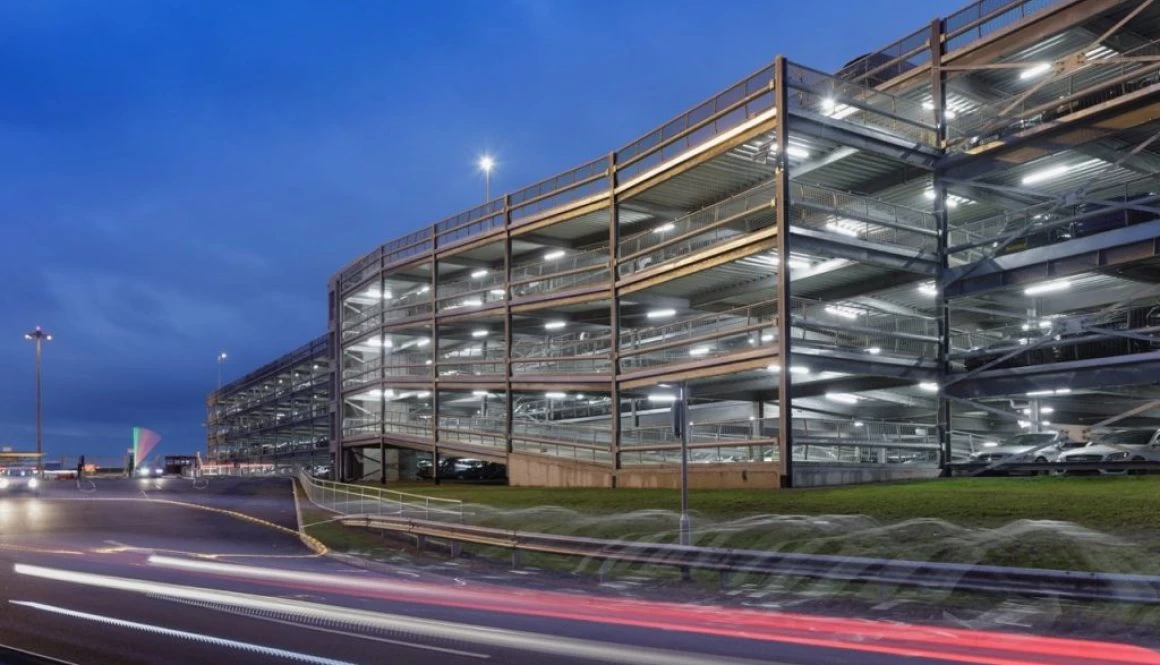



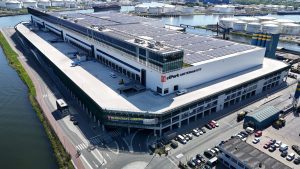




































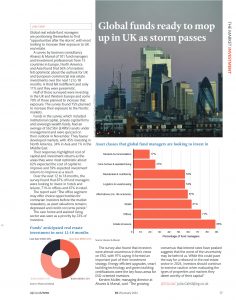





































































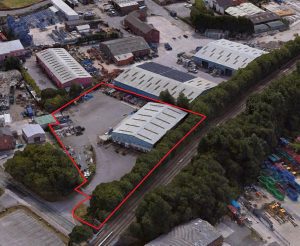
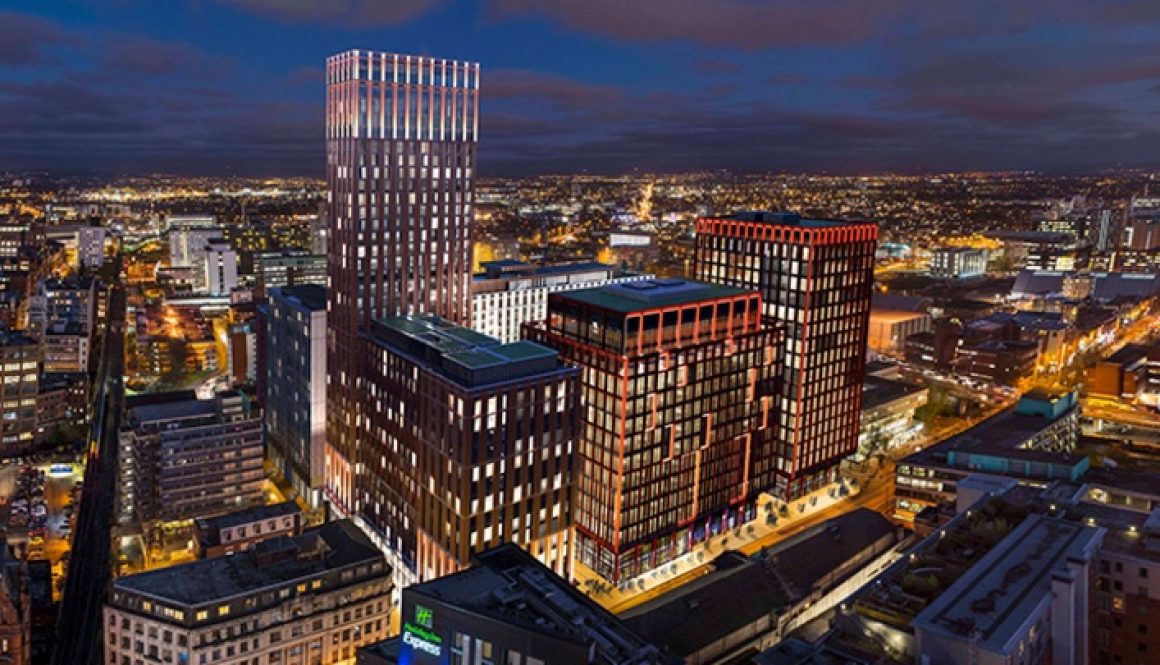



 Those sitting on their hands (buyers and sellers), I wonder what will happen post October 31st Brexit deadline. Will the market fall off a cliff? – highly unlikely. Will anything happen by 31st October? – unlikely, given current political situation. So, if a decision could be made now to buy or sell an asset, then October should not be a decisive factor. We always say that if a deal is good on paper, and the real estate fundamentals are good i.e. good location for sector and quality real estate to re-let if required, then why sit on your hands?