I read an article in the EG over the weekend which led me to look into this a bit further, as it could easily solve a question around the supply of last mile logistics in and around prime city centres.

NCP went into administration in March 2026 after financial struggles, due to remote working, lower city centre footfall and rising costs to park.
So far, NCP have closed 26 sites but still operate the majority of their portfolio (300 plus car parks) and not all sites are closing, albeit more could follow depending on restructuring or sales.
The wider UK car park industry is under pressure, and there are some important trends and warning signs to know, being a drop in demand, increased costs to park and site valuations becoming higher for alternative uses.
APCOA are facing similar struggles due to lower city centre demand and a pressure to shift toward digital or contract based parking. They have not confirmed closures but are adapting their business model.
Q Parks business is premium multi-storey car parks in city centres, focusing on higher quality sites, with EV charging and themed around “destination parking” close to major venues and tourists spots. The business is therefore less exposed than NCP, but still affected generally by reduced commuting demand.
The adaptation from multi-storey car parks for a last mile logistics hub is attractive.
The main driver being the same about all property sectors, location. Location is the fundamental for last mile logistics and generally, multi-storey car parks are located centrally in city centres, close to the consumer (public and business) and connected to main roads and public transport infrastructure.

Operators of last mile logistics may ‘take a view’ on the unconventional space due to the location and immediate connectivity. Demand for last mile accelerated during the global pandemic and has not really slowed down, with the consumer requiring same day or next day delivery as standard and the location of traditional warehouses being too far out of town an city centres.
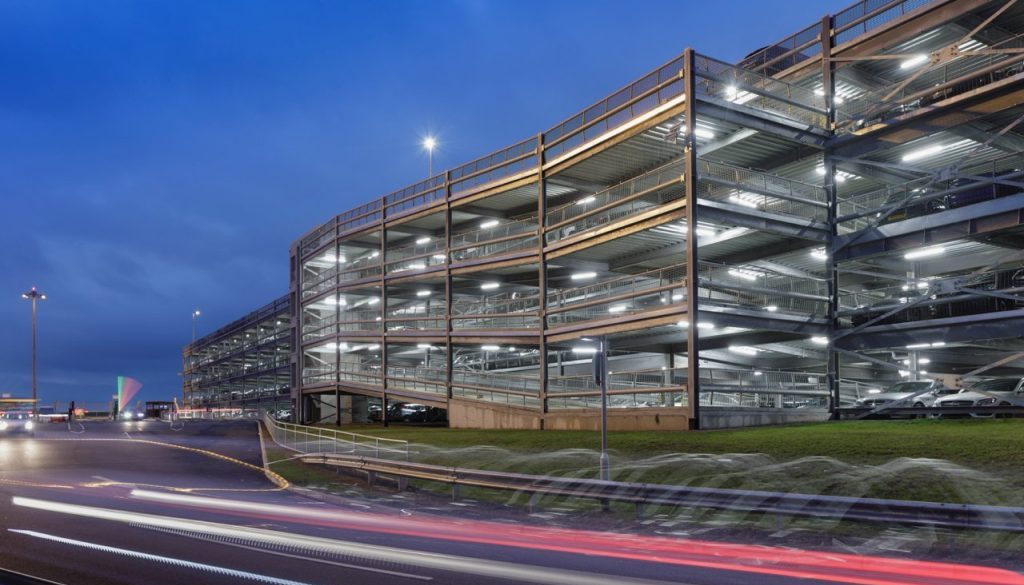
Car parks are structurally convenient and most likely already have ramps (good for small city vans, e-scooters and e-cargo bikes), multiple levels (can separate functions such as goods in, goods out, returns etc), power supply (useful for EV fleet) and lift access.
A typical multi-storey car park structure could convert as:
- Ground floor into van loading bays and lockers for customer pickup (click and collect format)
- Upper floors into parcel sorting / storage.
- Rooftop into EV charging or bike couriers.
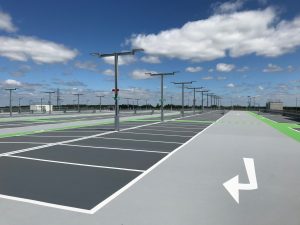
They’re not conventional but they could be cheaper and faster to repurpose than building new hubs in central city locations where land value does not make it feasible to develop out new stock.
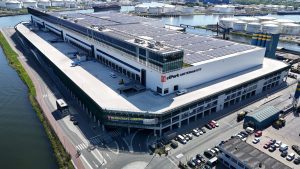
Whilst it may not happen overnight, the opportunity is obvious for certain sites where access in with larger HGV is possible for main incoming deliveries. Underutilised city centre car parks can appeal for parcel sorting hubs and micro-fulfilment centres, and it is already taking place in cities like Paris and Amsterdam, where underground or multi-storey car parks have been converted into urban logistics hubs and “dark stores” for grocery deliveries.
I can see this happening on selective sites in the UK, but do not envisage a mass transformation as a structural change for multi-storey car parks, as redevelopment for other uses such as residential may be preferred by councils and planning authorities. The under-performing centrally located sites are the obvious target, and it may be more of a hybrid use with part car parking, part logistics in some cases.
Cities such as Manchester (and London for a long time) are being redesigned around less commuting and more delivery so car park sites are becoming flexible urban infrastructure that can accommodate alternative uses.
An interesting one and pardon the pun, watch this ‘space’.